Plastic Pollution - Should We Worry?

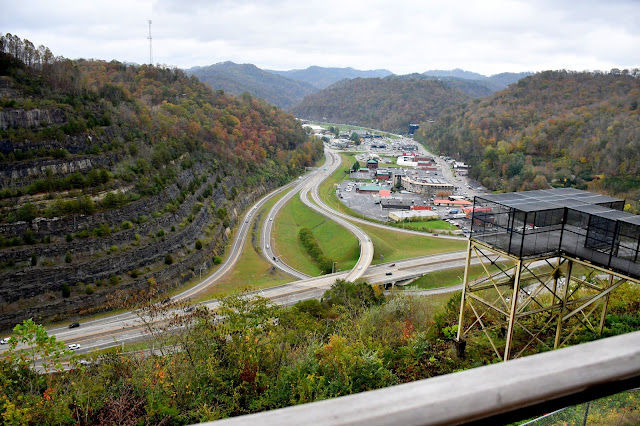
Beacon Heights Overlook Trail in North Carolina
Anyone familiar with the story surrounding plastic pollution, novel entities, and/or pollution loading in general will most likely chuckle or even laugh at the title of this article (I actually stole it from one of the studies). Studies over the last few years have more or less been screaming about this issue and I can't even keep up (despite writing about this quite frequently). Still, what good will worrying actually accomplish? My efforts here aren't intended to induce worry or anxiety but to bring about more awareness.
Last time I wrote about Stoicism and how it can help us maintain a good (or better) outlook on life. As I am about to demonstrate below as to why this is necessary, it is important to follow a few guidelines and set new boundaries within yourself. This can definitely be challenging (to put it lightly), especially for someone like me who writes about these topics. Still, doomscrolling is something you can choose to limit.
For those who don't have a lot of time and like shorter articles, this site is a good choice to learn more.
Originally, I was just going to add the latest study as an update to the older article I wrote four years ago, but then I noticed another new study, then several other studies that I wasn't sure I had added to the ongoing list. I decided that it was probably actually time to write a new article highlighting this predicament, as the danger it now presents is an order of magnitude higher than previous estimates.
One might believe that I am overhyping the situation. I'm not sure such an idea is actually even possible. I'll start with a quote from an article from Art Berman:
"Homer understood what we need to recover if we’re going to navigate our predicament with any wisdom: stop pretending we can bend reality to our will, and put our effort where it belongs—learning how to adapt to it."
Additional wisdom can help provide the courage to admit when adaptation is no longer possible. In an article from Elba, the new reality is, quote:
"...that while anyone under the age of 70 has unknowingly, unwillingly been accumulating this stuff in their bodies throughout their lives, the under-40s are experiencing a surge of “old people’s diseases” and reduction of “life health expectancy”, but it’s the under 20s who are most likely to feel the full range of impacts and have the highest life expectancy curtailed. Now, as Dr. Tracey Woodruff of UCSF has just reported, 2 year-olds have higher levels of these chemicals than their 3 or 4 year old siblings. And now transgenerational toxicity has been confirmed; nanoplastics can penetrate the reproductive system and trigger damage that is passed down through generations, even if the offspring are never directly exposed to the plastic themselves."
Since no link was provided for this study, I searched for it and came up with this. But at the same time, several more studies and papers also came up which I wasn't even sure I had seen before (here and here and here and here and here and here and here and here and here) - so many that I found it somewhat alarming, but moreso from the implications of what the content actually means. Now, this only underscores what I have previously been saying regarding microplastics, nanoplastics, PFAS, PFOS, and other plastic and chemical pollutants over the past several years. Keep in mind that it takes quite a bit for me to be alarmed these days, given the sheer amount of information all confirming my worst fears about what the future looks like.
Just like what Art Berman said in his article above about us not being able to predict the future because we don't know precisely what will happen, it is still possible that the worst won't actually occur, however, that window (or "door" in his article) is rapidly closing. As one can see in these studies, the situation is clearly worsening, and worsening fast. Keep in mind that as civilization continues collapsing, more and more technology that we often take for granted will be sacrificed in order to keep bare necessities flowing. For a view of what simplification looks like, check out this article or read this one.
I often entertain myself reading articles and/or watching videos that are physically (or biologically) impossible (or otherwise practically infeasible) and can't wait to see how they think they are actually going to accomplish the tasks I know just aren't going to happen. One such article had to do with building a sustainable civilization. When I told the author that what he was proposing was an oxymoron that simply cannot be, he told me that I was wrong. That provided quite a few laughs in the group I run, where most of our members actually understand a thing or two about biology, how civilization is built and maintained, and the foundation that it rests upon. Tom Murphy shares a similar story here. Sometimes I don't know whether to laugh at such ridiculous notions or cry at the level of ignorance. I always come back to precisely why we are where we are at this moment in time. For a video showcasing a similar scenario (another oxymoron), check this out.
If you took a look at the articles and studies here and realize that we are losing our ability to reproduce, good for you! Now, superimpose that same reality on all species (the microplastics and nanoplastics don't just target humans, after all) and what conclusions can one come to? If the species that our own existence relies upon are brought to extirpation, it no longer is about whether our own species has the ability to survive the upcoming changes (or more accurately, the rate of change) or not because the basis of our own survival relies on our own ability to reproduce and the existence of all the other species we need for our own existence.
I have had a few trolls over time who claim that I can't possibly know how the future will turn out. OK, fair enough - but look at the trajectory. What does the trajectory tell us? Being that we already know that there is no solution due to this being a symptom predicament under the umbrella of ecological overshoot, and that ecological overshoot is caused by our behavior of technology use (too many humans consuming too much and producing too much pollution), and that we are not reducing our use of technology in any significant way, and that the lag effect requires a considerable amount of time before any possible reduction of harm would take place - what does that say about any real chance of the trajectory changing enough soon enough to change the outcome?
Many years ago, I watched a video from Derrick Jensen which changed my outlook considerably. Suddenly I understood that our entire framework of life within civilization was entirely unsustainable, that civilization was irredeemable, and that civilization was going to collapse whether we wanted it to or not. Over the years since then, I have discovered multitudes of the same thesis over and over, where we actually lack agency to accomplish many of the goals developed following false beliefs of human exceptionalism (narratives) but which aren't actually congruent with actual reality. As pointed out above with plastics pollution and human reproductive ability, most of the aspirations, dreams, and goals of humanity will flicker out as we succumb to the natural outcomes of the predicaments we face. Here is yet another issue that many people probably never thought of regarding the rising carbon dioxide levels in the atmosphere as highlighted in this, quote:
"I actually think that what we are seeing is because our bodies are not adapting," Dr. Bierwirth said.
"It appears we are adapted to a range of CO2 in the air that may now have been surpassed.
"The normal range maintains a delicate balance between how much CO2 is in the air, our blood pH, our breathing rate, and bicarbonate levels in the blood.
"As CO2 in the air is now higher than humans have ever experienced, it appears to be building up in our bodies. Maybe we can never adapt such that it is vitally important to limit atmospheric levels of CO2."
Yet one more reason we lack agency to continue life as we would like to believe we can. My efforts last month were to (once again) point out the difference between problems and predicaments and to highlight the predicaments we face. These predicaments don't have solutions, period. Labelling something a "solution" does not make it so. Saying that "X" or "Y" or "Z" is the answer doesn't make it so. Calling a particular idea a solution or an answer is nothing more than a convenient narrative from someone attempting to sell people on that idea. While I understand that the purpose is to assauge the cognitive dissonance away, it is essentially nothing more than denial of reality.
A much better way to handle the situation is to adjust one's expectations accordingly, accepting the predicaments for what they are, work on our outlook, and Live Now. This sounds strikingly similar to "collapse now and avoid the rush," doesn't it? Well, since we must collapse anyway, working on our outlook and following our passions are two excellent choices; and together with acceptance, they make a strong foundation for a life lived well.
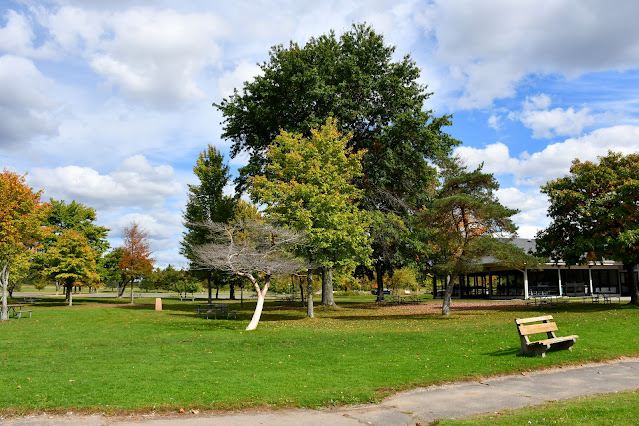
Now for one of my favorite parts of these articles, here are some interesting pictures from Rouses Point, New York; Alburgh, Vermont; and Lake Champlain!





I always appreciate your writing, thank you.
ReplyDeleteMany thanks for your hard work. I can't tell you how much I appreciate it. Daniel from France.
ReplyDelete