How Many Narratives Can You Spot?

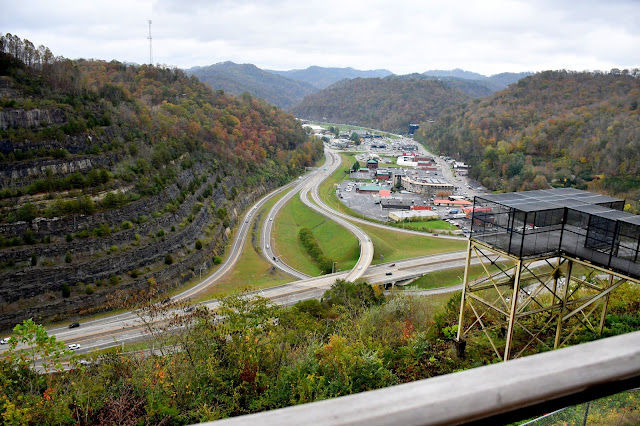
Lovers Leap Overlook, Virginia
Just after I finished writing my article last time, I came across this little gem of a discussion between Derrick Jensen and Tom Murphy, which fits really well into any of my articles. It was really worth the time listening.
I continue this interesting journey into the overshoot rabbithole and constantly find new material to talk about, and yet at the same time, it feels like I am simply reiterating and rehashing the same old stuff over and over again (probably because I am?). It's just that I keep finding more and more information that relates to this topic and explains so much about why we are here, how we got to this point, and what all the root issues are.
Speaking of getting to the root issues, I can't say often enough that climate change isn't the biggest issue; the biggest issue is ecological overshoot. Overshoot is what is causing climate change, so ideas that don't tackle overshoot can not and will not reduce climate change, the best that can be accomplished. Regardless of what some folks may say, climate change is not something that can be stopped or reversed in human timeframes. That can only be done in geological timeframes (absent a nuclear winter, which would most likely be pointless, since that would wipe out industrial civilization and most humans along with it). Elisabeth Robson discusses the reality in a new article focusing on a piece about climate alarmism with the most important detail here:
"By focusing on exaggerated claims about climate change, and concluding that “the elite panic about modernity is far deadlier than modernity itself,” spiked completely ignores the bigger picture illustrated by Tom’s graph: that modernity is unsustainable by any measure."
Read that last part again. ...modernity is unsustainable by any measure. Practically every idea that I frequently see labeled as some sort of "solution" for overshoot or any symptoms of it is actually an idea to extend civilization (modernity), but civilization is unsustainable, so it can't be extended forever. Sooner or later, the curtain is going to come down, and the longer we try to forestall things by attempting to kick the can further down the road, the quicker we run out of road.
What I find disturbing is the sheer number of "good news" stories that fill various groups and climate change pages across the internet. For those of us who understand overshoot as the root predicament caused by our behavior of technology use promulgated by cultural programming (see Century of the Self), wetiko, our natural biological imperatives, and technological addictions, we realize that these "good news" stories are narratives filled with what amounts to toxic positivity and leave out the full truth. For instance, one recent post I saw discussed all the good points about reforestation in Cost Rica, but left out any indication of the challenges involved:
More than 60% of Costa Rica’s annual 3 million tourists choose to travel to Costa Rica because of its environment and wildlife.[7] Eco-tourism has emerged as a booster for Costa Rica’s economy and contributes to the country’s reforestation efforts, but increased traffic to the country may pose a danger to its conservation efforts. For example, the Manuel Antonio National Park in Costa Rica receives more than one thousand tourists per day in the high season. Due to this traffic, the monkeys of the area have developed disruptive habits in their interactions with visitors and have become garbage feeders. This high traffic is problematic because it puts pressure on the park's infrastructure and natural resources; the increased human presence leads to habitat degradation, pollution, and disturbances to wildlife behavior. The park also experiences soil erosion on the trail and has problems with visitors trespassing onto private land.[8] Soil degradation can negatively impact the success of reforestation projects by eroding soil and making it difficult for new and young plants to take root and thrive.[9]
Barriers to participation
Although farmers in Costa Rica participate in reforestation projects for pro-environmental reasons before other motivations, barriers still exist to engage in such programs. These obstacles can include “a lack of technical skills for planting trees, unsuccessful past experiences, and a lack of trust in external organizations and initial reforestation costs."[10]
While the country’s Payment for Environmental Services [PES] program financially incentivizes landowners and farmers to engage in reforestation projects, many opt for more immediately profitable uses of land, such as agriculture and livestock farming, which offer quicker financial returns compared to the long-term benefits of reforestation.[11] This preference for short-term gains can hinder the expansion of reforestation initiatives, despite the environmental benefits and financial incentives provided by the PES program.
Climate change
Costa Rica is vulnerable to extreme weather conditions, such as drought, storms, hurricanes, and extreme precipitation. Climate change and its intensification of such events pose a threat to reforestation efforts. “The average temperature has increased between 0.2°C and 0.3°C per decade since 1970. Precipitation varies a lot from one year to another depending on the El Niño-Southern Oscillation (ENSO) phenomenon, the cycle of warming and cooling of the tropical Pacific Ocean which has implications for global weather."[12] As a result of shifting climate patterns, young trees may struggle to successfully grow and regenerate forests.[13]
Costa Rica is particularly vulnerable to wildfires, with its peak fire season typically beginning in mid-February and lasting around 11 weeks. The risk of wildfires is heightened by the country's distinct dry season, especially in regions such as Guanacaste and the Central Pacific.[14] Fire outbreaks can destroy reforestation sites, reversing progress and discouraging landowners from participating in future restoration efforts."
Another recent post detailed how the 8,000-km Great Green Wall in Africa is going to fight climate change, restore land, and feed millions. The only trouble is that this narrative once again hypes the vision but neglects to point to all the failures that have marred this project and a similar one in China, quote:
The Wrong Trees: Initial phases relied heavily on planting fast-growing, non-native trees in monocultures that were unsuited to harsh, dry environments. In China, researchers found that up to 90% of trees planted on sandy land died. In Africa, a 2025 study in Senegal revealed that many planted saplings perished because they lacked water and were the wrong species for the Sahelian climate.
Severe Water Depletion: Planting millions of trees in semi-arid and historically non-forested areas rapidly drains the already scarce groundwater. This heavy water use can cause surrounding native grasses and smaller vegetation to wither, leading to loosened topsoil and worse wind erosion.
Global vs. Local Disconnect: While billions of dollars have been pledged by international donors (like the World Bank or African Development Bank), much of this global funding struggles to reach the ground level. Bureaucracy, local government capacity, and tracking inefficiencies delay actual on-the-ground action.
Overgrazing and Land Rights: In the Sahel, fenced-off restoration sites frequently fail because nomadic herders require land to graze their animals. Without buy-in from local communities, herders often cut fences or allow livestock to graze on young saplings, destroying the newly planted areas.
Regional Instability: Ongoing conflict, terrorism, and political instability across the Sahel (spanning across countries like Mali, Chad, and Niger) have brought many restoration efforts to a complete halt."
While this particular post was about the project in Africa, a project in China has faced similar challenges. It would be funny if it wasn't so sad. None of these projects ever tackle overshoot - which is what dooms the projects in the first place. Even the Degrowth Movement, which is designed to reduce overshoot, doesn't really accomplish the goal.
On a different post, the narratives and claims of sustainability of this factory are beyond utterly ridiculous. Those of us in the overshoot community completely understand these bogus claims, but a large portion of society buy into these narratives and actually believe the labels affixed to this facility and similar ones.
In other words, we simply like to tell ourselves stories about our success while ignoring all the stories of our failures. The myth of human exceptionalism is what allows us to delude ourselves into thinking that infinite growth on a finite planet is even possible. An article from Balázs Matics (The Honest Sorcerer) follows this same set of circumstances and points out the same reality that the mainstream sources leave out. Any bad news or disparaging narratives must be eliminated at all costs, even if the view such sources provide are mostly false.
Like so many others who I feature here regularly, I am driven to point out these false narratives that appear to be going into overdrive as I type this. Several years ago I warned that denial of reality was about to be supercharged, but even I had no idea as to just how much of a boost it was going to get. I used to feel the need to analyze each "solution" and point out the inherent flaws in each one. Now I'm more likely to roll my eyes, laugh, and say, "Oh, isn't that cute? Another solution...yay, we're saved!"
I've given much thought to sustainability and the way that practically everyone alive today lives (minus Indigenous tribes) is entirely UNsustainable. The first goals of any type of "solution" (which I will now call "mitigation," since what we face is not a problem, but a predicament with an outcome) should be to return to living in a sustainable manner, which is essentially no longer possible by so-called "civilized" humans. What makes our living arrangements unsustainable is our behavior of technology use, so technology use is required to be reduced. This is generally where practically every conversation I've ever had with folks ends because most everyone is dead-set against living without electricity and all the other gadgets that allow us to live even better than monarchs (kings and queens) did just 150 years ago.
More often than not, I usually don't even get to the part where I explain that we lack agency to make such a decision, because the manner in which nature deals with overshoot is collapse and die-off, meaning we lose the ability to use advanced technology such as electricity whether we choose it or not. I rarely get to the part where I explain our relationship with nature (sadly, many people don't seem to be aware that we even have a relationship with nature). I usually get a confused look with them saying, "Excuse me? Say what?"
Once I explain that nature is where our food, our shelter, our clothing, and everything else we need to survive, comes from, and that all those items are our habitat. Without habitat, we cannot survive. So we definitely do have a relationship with nature, but most people rarely think about it. Geoffrey Deihl came out with an article which delves into what he calls a constitution for Mother Earth, and perhaps society could agree to come to a universal perspective on those terms. Of course, the corporations probably would find issues they don't like with it, since it would be the start of the end for them. The truth is, it's already the start of the end for them, as they cannot be sustained any more than civilization itself can. Still, I can see a fight brewing there, even if it is denial of reality, no differently than what I typed above about mainstream reports hyping good news and denying bad news (or leaving it out altogether).
Looking back at my last several articles, I can clearly see a pattern that divulges the reality that this too is yet another road that cannot be taken. Darn it, such is the dilemma and conundrum of predicaments. So, even mitigations (or just pre-cursors) are not really likely to make the cut. As Dr. Mike Joy says, "The only future for us is to end overshoot." I will add that his speech is the best 12 minutes I've spent in quite some time. Another realistic article I highly recommend is this one from Dave Pollard. Make sure to read the response from Hideaway at the bottom.
It's not easy comprehending the words, NO WAY OUT. I'm typing this up and it is currently the beginning of July. I fully expect that the consequences of the last several months are about to come crashing down. Only time will tell for sure, but I imagine right now that by the time this article gets published, people will be feeling the crunch if they aren't already. Apparently, folks in the West aren't the only ones feeling the crunch. However, another phenomenon besides a lack of energy and resources is about ready to pull some of its own punches. The rest of this year and early next year looks set to be quite interesting, to put it mildly. What comes after that is looking much less mild.
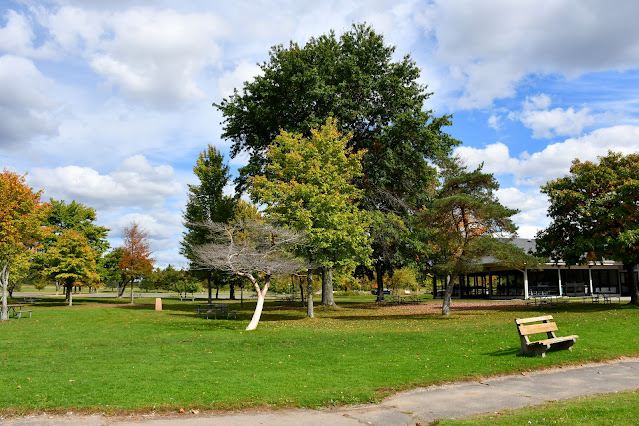
It's time for that inspiration that nature always provides; today I have Confederate Breastworks Interpretive Site and Sounding Knob Fire Tower to share!





Thanks for writing, always enjoy your weekly pieces. It does feel like things are accelerating, but the system keeps surprising me with its durability.
ReplyDeleteThe super rich think we can end overshoot through trans humanism, to reduce the population.
ReplyDelete