The Invasion of the Idiots

Picnic Pavilion near Balsam, North Carolina
One of my passions is to point out the realities we face and to demonstrate how these predicaments are completely different from the problems that people frequently talk about.
Problems are easy to visualize because they are ubiquitous to the landscape of daily life. What are we going to eat for dinner? How are we going to deal with the car breaking down? What are we going to get from the store next week? Problems by their very definition have answers or solutions. Predicaments are a whole different beast altogether. Predicaments have the insidious and pernicious quality of having an outcome, not a solution or answer. Another quality that they share is the inability to transform into a problem whereby an answer or solution might be possible. In the end, a predicament is where one can make a list of different actions that can be taken but none of them solve the situation or return the condition back to the original condition before the predicament was discovered. Some actions might mitigate the circumstances somewhat, but none of the actions or even a combination of actions will prevent undesirable consequences from taking place.
Why am I passionate about all of this? Because I find these predicaments fascinating in how and why they formed, the synthesis in how they will affect our lives, and what types of actions we can take that will make a difference. I'm also passionate about confronting these predicaments rather than hiding from them, which is why I promote loving and living now. Part of the Live Now ethos is acceptance of the predicaments we face. Full and true acceptance is what is called for; not denial of reality, anger and blaming, and bargaining, all of which will cause depression once one discovers that this does not produce acceptance and the stages of normality and happiness that follow acceptance. This happiness is tempered with the condition of acceptance being the new reality. Wisdom follows from experience and maturity, and this maturity, experience, and wisdom is necessary in order to achieve comprehension of topics I tend to discuss at length such as the illusion of self and separation and the mistake of basing future life on today's realities.
All of this leads up to today's topic - the outcome of the predicaments we face - symptom predicaments of ecological overshoot such as climate change, energy and resource decline, biodiversity loss, pollution loading, collapse, and, inevitably, extinction.
"In 2015, an 83 year old Italian philosopher described, with unsettling accuracy, what would unravel rational conversation. We now live inside the world he warned about.
Umberto Eco devoted his life to understanding how people communicate. He was a medieval scholar, a semiotician who studied signs and symbols, and the author of The Name of the Rose, an intellectual mystery that reached readers around the world. He understood how ideas spread, how language shapes what we accept as real, and how societies decide what counts as truth.
So when social media began to dominate public life, Eco watched with increasing concern.
In June 2015, during an interview in Italy, he was asked about the internet’s effect on society. His answer was direct and provocative. Social media, he said, gives legions of idiots the right to speak when they once only spoke at a bar after a glass of wine, without harming the community. Back then, they were quickly ignored. Now they have the same right to speak as a Nobel Prize winner. He called it the invasion of the idiots.
The reaction was immediate. Critics accused him of arrogance, of wanting to silence ordinary people, of being an out of touch intellectual who misunderstood democracy.
That missed his point. Eco was not arguing against free speech. He was warning about what happens when expertise is stripped of value, when years of study and evidence are treated as equal to a stranger’s instinct or opinion.
For centuries, public discourse had filters. Newspapers had editors. Publishers relied on fact checking. Universities used peer review. These systems were imperfect and often excluded voices that deserved to be heard, while protecting entrenched power.
But they also enforced responsibility. If you wanted to publish a medical claim, you needed proof. If you wanted to shape public opinion, you needed credibility. If you spread falsehoods, there were consequences.
The internet erased those barriers. Suddenly, anyone could reach millions. A teenager posting from a bedroom had the same platform as a seasoned academic. A conspiracy theorist could attract as much attention as a journalist who had spent months verifying facts.
And the most extreme voices traveled fastest. Social media platforms do not reward accuracy. They reward engagement. Anger, fear, and absolute certainty spread better than nuance.
A careful post explaining that an issue is complex and deserves thoughtful consideration rarely goes far. A post shouting that everyone is being lied to explodes across feeds.
Eco watched this unfold as flat earth believers found each other and organized. As anti vaccine myths moved faster than public health guidance. As political falsehoods that could be disproven almost instantly became widely accepted alternative narratives.
He watched respect for expertise erode. Climate scientists with decades of research were challenged by bloggers with no training. Doctors were dismissed in favor of influencers selling wellness products. Historians were drowned out by people who claimed to have done their own research.
That phrase became shorthand for rejecting knowledge in favor of whatever confirmed existing beliefs. Eco understood a critical distinction. Giving everyone a voice is a beautiful ideal. Treating every voice as equally authoritative is dangerous.
A relative’s social media post about vaccines is not equivalent to a peer-reviewed medical study. A viral claim of election fraud is not the same as official voting data. An influencer’s opinion on climate change does not carry the same weight as scientific consensus from NASA.
Yet online, they appear identical. They sit side by side in feeds with the same design, the same emphasis, the same algorithmic push. Platforms do not tell users which information comes from experts and which comes from people with no relevant knowledge. They simply present everything and leave the audience to sort it out.
This is what Eco meant by the invasion of the idiots. Not that ordinary people lack intelligence, but that systems amplify the loudest and most confident voices regardless of whether they know what they are talking about.
Confidence spreads more easily than accuracy.
Nine months after that interview, in February 2016, Umberto Eco died at eighty four.
He did not live to see how completely his warning would be confirmed.
He did not witness a global pandemic where misinformation traveled faster than the disease, leading people to trust social media posts over doctors, with deadly consequences.
He did not see millions convinced that elections were stolen based on viral claims disproven again and again.
He did not see artificial intelligence making realistic fake videos possible, or automated accounts flooding platforms with propaganda.
But he identified the central danger. When every opinion is treated as equally valid, truth becomes just another opinion. Eco was not calling for censorship. He was calling for a renewed respect for expertise, for evidence, for the labor required to actually understand complex realities.
He was reminding us that while everyone has the right to speak, not every claim deserves belief. That a doctorate in epidemiology matters. That peer-reviewed research matters. That journalistic standards matter.
And that seeing something on social media should never be the endpoint of critical thinking.
Before his death, Eco reflected on heroism, saying that the true hero is always a hero by accident, someone who dreams of being an ordinary, honest coward like everyone else.
In our current moment, intellectual honesty requires courage. Admitting uncertainty, seeking expert knowledge, and changing one’s mind in the face of evidence are no longer rewarded behaviors.
Platforms reward certainty. Algorithms favor outrage. Attention flows to whoever shouts the loudest.
Being careful, thoughtful, and humble about what you actually know has become a radical act.
Umberto Eco spent his life studying how meaning is created and shared. He watched the internet reshape communication in ways that deeply troubled him.
Not because people were speaking, but because truth was being buried beneath noise.
His warning in 2015 was not bitterness. It was an act of care, for knowledge, for public discourse, and for the possibility of understanding one another through reason instead of tribal loyalty.
We are living in the world he feared. The problem was never that foolish voices appeared. They were always present. The problem is that they are now amplified while expertise is dismissed.
Eco left us with a simple question: What are we going to do about it?"
Ultimately, the points I routinely make here are such that it doesn't really matter that WE™ do. It is disappointing that so many people make false claims that we can avoid collapse, or die-off, or even extinction. I understand why they do it (they cannot accept the actual reality), as their worldview will not allow them to accept the predicament. But false beliefs and mental compartmentalization aside, denial of the situation only prolongs the stages of grief and prevents healing. The outcome of the predicament will not be changed simply from refusing to accept it. By Living Now, you won't stop or solve the predicament, but you will be a happier individual.
It pains me to have to write this article because I know all too well that most people aren't going to like what I have to say. The best thing to do is look at the information I provide with open eyes and an open mind, because just like a parachute - it only works when it is open. Here is a new study which more or less encapsulates what I have been trying to say for the last decade (over 5 years here on my blog), quote:
"Many ecologists hypothesize that, as global warming accelerates, change in nature must speed up. They assume that as temperatures rise and climatic zones shift, species will face local extinction and colonize new habitats at an ever-increasing rate, leading to a rapid reshuffling of ecological communities. A new study by researchers at Queen Mary University of London (QMUL) and published in Nature Communications shows this is emphatically not the case.
The researchers analyzed a massive database of biodiversity surveys, spanning marine, freshwater, and terrestrial ecosystems over the last century. The evidence showed that not only had the "turnover" of species in local habitats not sped up, but instead, it had significantly slowed down.
Dr. Emmanuel Nwankwo, lead author of the study, explained, "Nature functions like a self-repairing engine, constantly swapping out old parts for new ones. But we found this engine is now grinding to a halt." "
"Many ecologists hypothesize that, as global warming accelerates, change in nature must speed up. They assume that as temperatures rise and climatic zones shift, species will face local extinction and colonize new habitats at an ever-increasing rate, leading to a rapid reshuffling of ecological communities. A new study by researchers at Queen Mary University of London (QMUL) and published in Nature Communications shows this is emphatically not the case.
The researchers analyzed a massive database of biodiversity surveys, spanning marine, freshwater, and terrestrial ecosystems over the last century. The evidence showed that not only had the "turnover" of species in local habitats not sped up, but instead, it had significantly slowed down.
Dr. Emmanuel Nwankwo, lead author of the study, explained, "Nature functions like a self-repairing engine, constantly swapping out old parts for new ones. But we found this engine is now grinding to a halt." "
This is difficult because I am human too, and I don't like the reality any better than anyone else. But it wouldn't be right for me to lie and give anyone false hope that we can somehow find a way out of this. While nobody yet knows how this will all turn out specifically, there have been many physicists, biologists, ecologists, and other experts who have already told us what I have outlined here over the past several years.
I had the privilege of working and conversing with the late Gail Zawacki in several different groups. This interview with her from Sam Mitchell almost 8 years ago is a primer. I saw this quite some time back but decided to re-watch it after a friend forwarded it to me. I think the title says it all here: "You're Not Gonna Be Able to Survive This, No Matter How Much You Prepare." I found the last segment especially poignant about being an Epochal Optimist. How true that rings. One passion that I shared with Gail was my love of trees and it was rather exciting for me when someone else shared my concern for tree decline. I shared Gail's work with my own in my article about trees here. James Galasyn wrote this article eulogizing Gail.
Next up is another video, this time one from Physicist Brian Greene, who explains once again why we cannot stop or reverse the mass extinction we are currently a part of (from the description), quote:
Greene explains why even perfect environmental stewardship starting tomorrow couldn't prevent massive biodiversity loss over the next centuries. He exposes extinction debt—thousands of species currently alive but below minimum viable populations, functionally already extinct. He reveals how ecosystems respond to change decades after disturbance, meaning we're still experiencing consequences from environmental damage done in the 1970s, while damage we're causing now won't fully manifest until 2100.
The rate of change exceeds species' ability to adapt by orders of magnitude. Climate zones are shifting kilometers per year while trees can only migrate hundreds of meters per year. Habitat fragmentation has created isolated populations too small to survive long-term. Coral reefs are committed to collapse from warming already in the system. Multiple stressors—climate, habitat loss, pollution, invasives—interact synergistically, overwhelming species already stressed.
This isn't defeatism—it's triage. Greene argues we must shift from prevention to mitigation, from "saving everything" to strategic conservation of keystone species and ecosystem functions. Ex situ preservation, assisted migration, managing novel ecosystems, and brutal honesty about what's achievable versus what we're pretending is achievable."
I posted this link to one of my articles above which highlights at least one reason why we can't save species. Once again, people just don't understand hyperobjects and we do not have control over them. It's really important to stress these facts to highlight the narcissism of our anthropocentrism and how ignorance, hubris, and stupidity rules the human world collectively (as Umberto Eco stated above with "the invasion of the idiots"). The last half hour of the above video is the obligatory pure hopium which I have taken the time to dispense with in this article, as Greene claims that we can't stop the mass extinction but that we should try anyway. Magical thinking abounds in so many of these videos and articles - once again, the epochal optimist.
It is extremely important to note that what we do at this point is more or less irrelevant. Mass extinctions create their own conditions that we have no power or ability to change, and since we will most likely be one of the species that gets extirpated, along with all other large organisms, it is with a chuckle for me to think that "saving species" in today's world will have any effect whatsoever on future conditions. That is nothing more than sheer hubris - more "command and control" thinking that brought us here in the first place. Sure, we can "save" species temporarily right now - but we don't control the future and without the power of technology and fossil fuel energy, how will we keep these species "saved"?
It is this anthropocentric idea that we can save species and can control nature around us that is at the heart of the fault of logic that we suffer from, not seeing that it is our very behavior of innovation and technology use that have caused the mass extinction that we incorrectly think that we can "save" or mitigate by using the exact same thinking and behaviors (innovation and technology use). What is actually required is for us to leave nature alone, reduce technology use, and work to help educate the rest of society about these facts. More interfering, attempts at command and control, and all other efforts at trying to "solve" anything can only make the existing situation worse simply due to the fact that we don't actually know everything about how all these systems (hyperobjects) actually work - we like to think we do, but we don't.
It's often highly counterintuitive to think that we don't have agency to do much in regards to the predicaments we face, but this is the unvarnished reality. I keep thinking routinely that my job here is finished, because for the most part, I have next to no influence - and even if I did, how many people would actually change how they live based on information I delivered? Then I remember that I am not here to change lives so much as I am to plant a seed. That's it - plain and simple.
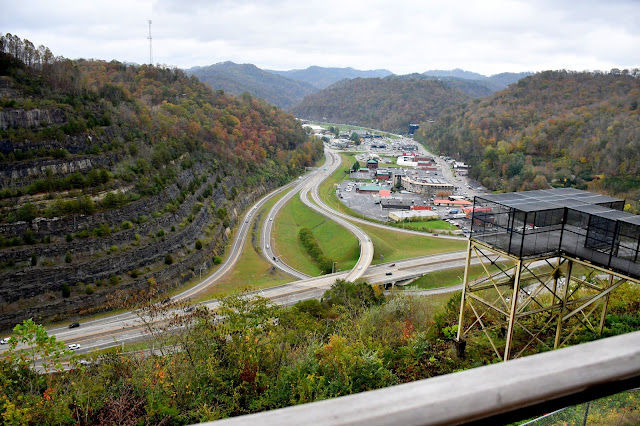
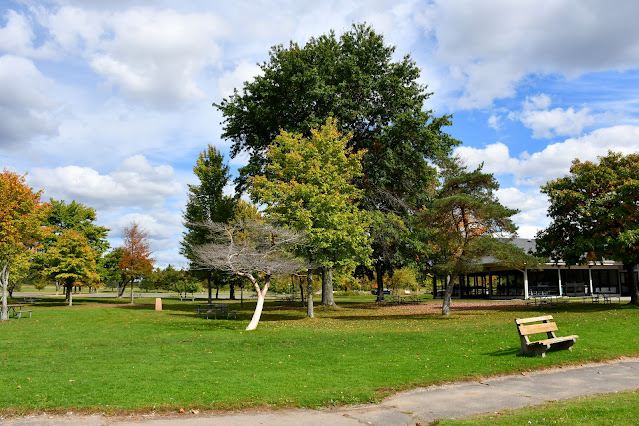
So, get out there and Live Now! Here are some pictures that might provide some motivation from Whiteface Veteran's Memorial Highway.




I find it terribly upsetting, what you have described, and I concluded a few years ago as well. Nevertheless I have learned that false hope is worse than no hope; I liken it to banging ones head against a wall. Knowing what I know, I still prepare in some small scale, so that I can perhaps deal with smaller disasters, and who really knows what the future holds? I am old, so I won't be around very long anyway, but still, one would like to occassionally nourish a tiny speck of hope. Maybe after a couple glasses of wine.
ReplyDelete" how many people would actually change how they live based on information I delivered? "
ReplyDeleteMore than you think.
great piece & links, as usual. if you talk about problems vs predicaments every day for the rest of your life, that will be time well spent! other ways to say "predicament": we're in a pickle; ah what a tangled web we weave.
ReplyDeletelove that you mentioned gail Z & i agree with this: "I think the title says it all here: "You're Not Gonna Be Able to Survive This, No Matter How Much You Prepare.""
preppers gonna prep; I guess that's their version of living now. it allays their anticipatory anxiety. but the best preparation i think is to stay curious, flexible, light on your feet.