Qualities of Predicaments To Keep In Mind

Fog on the reservoir at R.B. Winter State Park in Pennsylvania
One of the things I frequently come across on an almost daily basis is the disconnect between daily living and the energy and resources required to sustain said activity. Very few people understand that without the ability to maintain the fossil fuel platform (having enough energy to keep the extraction process, the transportation of the raw material (coal, methane, crude oil, tar sands, etc.) to the refineries, the transportation corridors (roads, railroads, ships, etc.) open and operating smoothly, pipelines, pumping stations, and civilization itself [since it is us who actually maintain all these systems] running), civilization itself comes to a rather sudden stop. If there isn't enough energy to keep those systems operating, the entire system of civilization slowly comes to a stop.
Perhaps you've witnessed a partial stoppage of systems when grid power goes down. Stores can't sell items (including gasoline), traffic signals go dark, the lights at your house go out, refrigeration and heating appliances stop working, etc. Now, imagine all of that PLUS all the activity on railroads and roads and airports coming to a standstill, transporting ships and barges, tractors, agricultural equipment, mining equipment, and everything else powered by coal, gas, and oil coming to a stop. It's difficult to imagine because with the exception of a few local to regional scenarios, it has never happened to the entire country here in the US.
The only time in memory I can think of where all the airlines (just the airlines, to be precise) came to a standstill was in 2001 after the World Trade Center incident in New York. That was a once-in-a-lifetime type of scenario. This makes it exceedingly difficult to imagine everything shutting down because it is extremely rare to non-existent in our lifetimes.
A friend of mine posted this quote below along with this short video, and after a comment left on my article Walking Away and Opting Out claimed that we cannot opt out (which is partially correct), I'm pushing back on that narrative with evidence of someone opting out even more than what I have done. Maybe we can't completely opt out (like I have explained many times), but we certainly can reduce the harm being done:
One of the many epiphanies of living like this is that at my age it can't be done without help. And the help available to me reliably comes out of a red gas resistant container that I fill up every two weeks. The tractor, the chain saw, the generator, the pressure washer, various pumps... and those gas cans - are my best friends on a semi- seasonal basis. When my fiancé joins me here she will help with some of that and she will most certainly become my new best friend because she will bring things to my party that cannot be purchased with any degree of satisfaction and certainly doesn't come in a red plastic container. None the less, the point I'm trying to make is that no matter how we arrange things, or try to, we, as a society and individually, are inextricably embedded in a fossil fuel-powered system.
The economy at large and virtually every aspect of our individual lives had been engineered over a century or more to be utterly dependent upon the fuels that provide the highest energy density ever discovered by man - gasoline, methane, propane, diesel, kerosene, coal... the list goes on. This doesn't even begin to address our dependence upon a stable climate and reliable seasonal weather patterns. This little clip from the program "The Landman" lays out in clear succinct words this exact point. When that flow of energy ceases... so does everything else that we thing of as ideal, optimum, or even functionally livable in our society as it is designed... including the extraordinarily lopsided, out of balance harvesting of wealth - a transfer of the value of millions of people's individual natural capital - their labor - and it's converted value in the marketplace to a ridiculously small number of people who control the processes by which all of that network operates.
Make no mistake, the fully embedded and dependent oligarchy will suffer just as much, maybe more, with the collapse of this fossil fuel-powered, profoundly unfair market and predatory capitalist system that feeds it. But that collapse, coming soon, will bring with it suffering on a massive scale that most people alive today cannot begin to imagine, but which, most of those same people will be alive to experience. The clearest indication of this can be seen in every single event, more and more frequent, where the power of the natural world, destabilized by that century of human activity, vastly overwhelms the miniscule might of the human social process.
This extended bitter cold being experienced by the better ⅔ of the [United States] nation's population right now, the effects of a hurricane, hundreds of miles inland from landfall, in western North Carolina, last year's derecho winds destroying crops in the northern Midwest, extended drought destroying the ability to grow a crop in over 20% of the nation's agricultural land... including hay... that feeds the beef and dairy and other livestock in the winter... and summer when it's not growing well outdoors.
To modify a quote from "The Pirates of The Caribbean" - "You better believe in life-altering catastrophe Missy, because you're living in one!"
I'm well aware that living off-grid doesn't reduce one's dependence on civilization much (if at all), but I can still applaud these kinds of efforts. I know they won't make much difference, but he is Living Now in the manner which reflects his morals and his passions, and at his age, he deserves far more than just applause.
My friend is doing this even though he won't be suffering the consequences of collapse much longer, as he is already elderly. I've chosen to write about him this week because of the sacrifices he is making. He understands that his existence adds to the overshoot predicament we face; and yet he is doing what he can to minimize the effects of his existence. Truly, this is pretty much the best that can be accomplished. We must forgive ourselves for being who and what we are as a species.
Recently, I came across a video from Arthur Keller, a fellow collapsologist. Many of you may remember him from a video I posted in an article a few years ago titled, Collapse: The Only Realistic Scenario. Here he is giving details on a so-called "solution" which in the very first minute I am extremely skeptical of due to him mentioning the word "hope." In the next minute, he calls symptom predicaments "problems" which further elevates my skepticism. He then uses the word "predicament" which gives me reason to continue the video.
Keeping in mind that he knows what we know, I plod through the video. Sadly, he fails to comprehend our lack of agency to meaningfully and voluntarily reduce overshoot. No talk about reducing technology use was mentioned anywhere in the video. Like all other "solutions" I have detailed over the past decade or so, there will be those who take on the challenge, but never enough to quell the coming storm. Once again, seeing this from a systemic challenge is beneficial, but not enough. The entire system of civilization will have to be abandoned in the end, and very few people will be interested in such a proposal, relegating ideas like this to incremental change insufficient to change the outcome. Of course, what else would one expect from a TED video?
Keeping in mind that he knows what we know, I plod through the video. Sadly, he fails to comprehend our lack of agency to meaningfully and voluntarily reduce overshoot. No talk about reducing technology use was mentioned anywhere in the video. Like all other "solutions" I have detailed over the past decade or so, there will be those who take on the challenge, but never enough to quell the coming storm. Once again, seeing this from a systemic challenge is beneficial, but not enough. The entire system of civilization will have to be abandoned in the end, and very few people will be interested in such a proposal, relegating ideas like this to incremental change insufficient to change the outcome. Of course, what else would one expect from a TED video?
I can further critique his points given the information I already have at my fingertips, such as our lack of universal perspective. One must also understand that external change can only come from internal change, although he does briefly outline this in the video, albeit insufficiently. I do classify this as just another idea lumped into the solution obsession category. There simply are too many reasons why we won't change direction, including who and what we are as a species. The video sounds mostly like special pleading to me. However, many other experts who understand various parts of the system of civilization such as Simon Michaux, Katharine Hayhoe, and Michael Mann have also turned to bargaining to maintain civilization. I do often wonder why this is, and so far, the only answer I have come up with is money. They all want to cash in on people's ignorance. They have families and have to eat too, so who am I to fault them for anything other than being misleading? I see carnival barkers all over the place attempting to make the latest grift, so this isn't really much different here.
For all practical purposes, much of the psychological reasoning for all of this revolves around the idea that we are a rational species, despite the evidence to the contrary. It actually can be summed up in a simile; the idea that we can continue civilization is actually very similar to the idea that an illicit relationship known as an affair can be continued:
1. Cognitive Dissonance
1. Cognitive Dissonance
People keep secrets to reduce the mental conflict between their actions and their self-image. Secrecy allows them to see themselves as "not a bad person" despite betrayal.
Secret-keeping gives a false sense of control over consequences and outcomes. The person believes that as long as no one knows, no real damage exists.
Affairs are mentally separated from everyday life to avoid guilt. This psychological splitting allows someone to be loving at home while betraying in secret.
4. Fear of Loss
Secrets are kept to avoid losing stability, reputation, or emotional security. The goal is often to have both the affair and the relationship without sacrifice.
5. Emotional Avoidance
Secrecy helps avoid uncomfortable emotions like shame, accountability, and confrontation. Silence becomes a shield against self-reflection.
6. Thrill and Reinforcement
Hiding the affair can increase excitement and emotional intensity. The secrecy itself becomes psychologically addictive.
7. Distorted Moral Boundaries
Over time, secrecy shifts personal moral limits. What once felt wrong slowly becomes justified through repeated concealment.
8. Delayed Consequences
Secret-keeping postpones pain but magnifies it when revealed. The longer the secrecy lasts, the deeper the psychological damage.
Similarly, the longer civilization persists, the deeper the damage. Yet, how could society actually persist otherwise in today's world? Surely consumption could be lowered, but the sheer number of us today more or less requires technology use.
Once again, it is always helpful to remember that this is a predicament with an outcome, not a problem with a solution. Justifying technology use, however, doesn't mean that we can't reduce the use of it. One can opt out of using it to the extent possible just like one can opt out of having children. I mentioned in a previous article how I felt bad for a couple expecting a new child that I had read about in an article. I received some pushback for my comments, which surprised me given the context I provided. Perhaps I didn't give enough information about how I felt. My empathy for the couple is due to knowing what I know about overshoot and the outcome it will usher in. This cannot help but be brutal to those who survive to witness it, and anybody who has children today knowing about any symptom predicament or the root predicament of overshoot (or learning about it after the fact) will come to regret such a decision. This doesn't mean that I expect people to quit reproducing, nor do I criticize them for doing what we do as a species. I am simply being critical over the fact that these decisions will come back to haunt them later and the guilt associated with that. I'm sorry, but I simply cannot feel good about the pain I know they will suffer. It makes the pain I suffer on a daily basis (knowing what I know) appear small and insignificant by comparison.
Going back to the fact that the predicaments we face have an outcome, not a solution, we need to be able to view this from the perspective of the cycle of life. This means doing the mental work of what is and what is not. Too many people are suffering from the false dichotomy of winning or defeat. Accepting these predicaments does not mean defeat. Doing something about them doesn't mean winning. When you look at nature and you see a lion killing another animal in order to eat, do you see it as winning for the lion and defeat for the other animal -OR- do you see it as the cycle of life? Once one stops looking at all of this as a problem to be solved and sees it instead as a predicament with an outcome and just part of the larger framing of the cycle of life, then one can witness the truth of the illusion of control. We like to think we're in control of all of this when in reality, nothing could be further from the truth.
In my last article, I pointed out a rather poignant and valuable article from Dave Pollard that has a short quote that says it all:
"I’ve begrudgingly learned two hard-won lessons in humility so far in life: First, my youthful confidence in ‘fixing’ and ‘saving’ the world gave way to an understanding of how complex systems actually work: nature adapts through deep, redundant, interconnected processes that humans cannot control, copy, engineer, or outlast. Human attempts at efficiency, mastery, and rational design repeatedly fail against nature’s resilience and its unpredictable, unfathomable complexity. And human-built systems are inherently fragile, inflexible, require far more maintenance than we are capable of investing in them, and quickly and inevitably collapse over time, especially as they get large and unwieldy.
And second, I lost my faith in human agency to bring about positive change. Our behaviour I see now is not guided by reason or belief but is fully conditioned by biology, culture, and circumstance; beliefs merely justify actions after the fact. As a result, our personal ‘choices’ and intentions have no impact on our behaviour, and have never significantly affected anything. I no longer believe the world can be improved through ‘conscious’ effort or will, nor that we have any control whatsoever over our actions.
These are lessons of disillusionment that slowly ‘dawned’ on me. So now, in the same way that I’ve come to appreciate that the sun’s apparent revolving around the earth is an illusion, so too have I come to appreciate that human agency, free will, and capacity to control, sustain, and ‘improve upon’ vastly complex systems, both natural and man-made, are likewise illusory."
And second, I lost my faith in human agency to bring about positive change. Our behaviour I see now is not guided by reason or belief but is fully conditioned by biology, culture, and circumstance; beliefs merely justify actions after the fact. As a result, our personal ‘choices’ and intentions have no impact on our behaviour, and have never significantly affected anything. I no longer believe the world can be improved through ‘conscious’ effort or will, nor that we have any control whatsoever over our actions.
These are lessons of disillusionment that slowly ‘dawned’ on me. So now, in the same way that I’ve come to appreciate that the sun’s apparent revolving around the earth is an illusion, so too have I come to appreciate that human agency, free will, and capacity to control, sustain, and ‘improve upon’ vastly complex systems, both natural and man-made, are likewise illusory."
Look, the insidiousness and perniciousness of these predicaments is stark enough; we really don't need to add injury to insult by incorrect thinking about them. Many people have developed a rather negative term to describe those of us who use critical thinking to arrive at the conclusions we have: doomer. What they accuse us of is known as doomism. Unfortunately, having a complete and comprehensive understanding of overshoot doesn't really have many positive viewpoints. Once again, this too, is another false dichotomy to avoid. Does nature see overshoot as a "negative" thing? Nope, it is just cleaning up the mess made when a species goes into overshoot. What kinds of positive things can come from overshoot? This question does depend upon perspective, but when extinction is one of the possible outcomes, it's difficult to see it as being positive. This is what makes people like the author of that CNN article sellers of snake oil (or hopium) and what they suffer from is known as toxic positivity. Sadly, toxic positivity is yet another behavior we suffer from. Basically, they're in denial of reality.
There is a big difference between understanding our lack of free will and comprehending how that affects the predicaments we face. If one truly understands determinism, then one realizes that determinism doesn't determine the future. However, what does our lack of free will tell us about any ability we might have to "steer" the future in a direction we might like? Understanding that civilization is inherently unsustainable and always has been tells us that choosing it is not a very wise decision for the long haul, right? But what about our addiction to technology? How likely is it that we will willingly forgo technology use, most likely cutting off our ability to provide clean, safe, potable water and our supply of dependable food (agriculture is technology) in an effort to survive the mass extinction we are currently part of? Such a suggestion sounds totally ludicrous, doesn't it? But it is true that the future is not set, as Tom Murphy points out here in this article:
So, in actuality, the choices we might make if we were to choose resilience and sustainability as the qualities we most desire for longevity of our species will be selected out due to our addiction to technology use and denial of reality, not to mention practicality. This will exacerbate the predicaments and problems we face already. So, the fact that we baked into the predicaments we face today the requirement to continue the addiction, this addiction will do what every other addiction does - eventually it will kill us. Why is there such mass denial of this simple reality? It really appears no different from folks who think that despite being in a mass extinction, we will somehow be able to avoid being one of the species marked for extinction or that we can likewise somehow avoid collapse and die-off despite being in extreme overshoot. It makes more sense when one understands that our species is not a rational one, but a rationalizing one. Still, the cognitive dissonance and denial are so obvious. Perhaps it is the same optimism bias present in the addict who claims that he or she can quit anytime they want.
I understand that many people get caught up in the myth of human progress, human ingenuity, and our supposed level of intelligence. How intelligent is a species that develops an inherently unsustainable system that keeps collapsing over and over and yet WE™ continue attempting to extend said system? Worse than that, even, is the question of why we continue developing comforting narratives to assuage ourselves into thinking there is some way to make this unsustainable system sustainable or that there is some way to avoid collapse or that if we all unite and "act together" that this will "fix" it. All of these together are really nothing more than denial of the reality that we are in a predicament, it has an outcome - not a solution, and absolutely nothing we can do will solve it. The best that can be had is a reduction of the harm which is also unlikely because technology use must be reduced in order to accomplish it.
The reason that no other form of action outside of reducing technology use will suffice is due to the fact that technology use reduces and/or removes negative feedbacks. Through this action, technology use incorporates self-reinforcing positive feedback loops such as population growth which fosters more technology use which fosters more population growth in a vicious cycle. There's a well-known phrase that "there is no free lunch." This is why degrowth advocates ignore their bargaining. Many people like the degrowth idea because mainstream degrowth advocates don't stress the need to reduce technology use and without tackling this requirement, [voluntary] degrowth simply cannot happen. This leaves nature to take care of the details through energy and resource decline.
On the topic of comforting narratives, we continue developing ones like "the energy transition" which denies the fact that there has never been any such transition (and there isn't one now either). You can find a whole bunch of these narratives in my fantasies, myths, and fairy tales series (the latest one here). Steve Bull likewise has entire sets of critiques on a variety of "solutions" here.
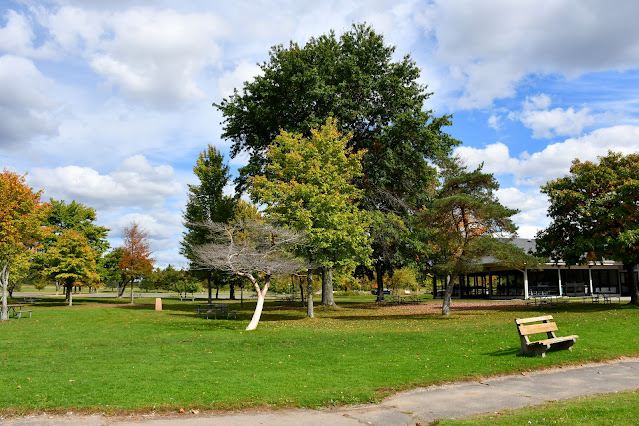
Hopefully this will provide some useful material to think about in terms of what we face moving forward. While moving forward, it's wise to take some time out to enjoy nature and be grateful for what we still have. Here is my latest Treasured Traditions post to help you get started; Fairy Springs Park!





Another great article, Erik! Harm reduction is perhaps all we can do at this point in our journey. If only this thinking could be adopted by a tipping point of our species…
ReplyDelete