What is Civilizational Amnesia?

Light at the end of the tunnel? Actually, this is Jacks Creek Covered Bridge
near Woolwine, Virginia
"The unsustainability of human civilization is best seen through what it does to its truth tellers: From Socrates to Nelson Mandela to Dr. Martin Luther King and Greta Thunberg, we labeled truth tellers as Cassandras and witches, hunted them down, and threw them in jail."
George Tsakraklides, In The Grip of Necrocapitalism
My last several articles dealt with the ongoing set of predicaments caused by our living arrangements collectively known (now) as industrial civilization (aka modernity). Lots of people realize that industrial civilization is unsustainable but fail to see that civilization itself is also unsustainable because it is based on the technology of agriculture. This unsustainability is structural; it cannot be changed - not with permaculture, not with food forests, not with regenerative agriculture, not with vertical farming, and not with any type of agriculture.
Agriculture itself brings certain requirements into the forefront which introduce new problems that have to be solved. How do humans solve those problems? With complexity by introducing new technologies. If you take one technology which proves to be unsustainable and then add more technologies on top of it, those new technologies by definition cannot be sustainable because they required the unsustainable technology in order to be built and operated - in other words, to exist.
Because our society today rarely mentions any negative qualities about technologies and generally only points out how great they are, most people never stop to think about what is required for these technologies to exist and to operate as well as what happens to them when their service life is over and they must be decommissioned. If we actually pointed out the negative qualities more frequently, we would get a more balanced perspective as to what these technologies are causing to happen through our behavior of using them.
Notice how most people are now reacting to data centers and Flock cameras. There is a movement to cancel city contracts with Flock, as denoted by this site. To be honest, cities and towns should probably all cancel their contracts anyway given the exceedingly poor performance of the company. These two phenomena (data centers and Flock surveillance cameras) operate in unison with each other, fueling privacy concerns, surveillance abuse, and misuse by individuals and organizations outside of the companies operating these devices. Pushback is also happening against data centers. Maybe we've reached a turning point? It's true that there are now people actively rejecting mainstream popularity on multiple fronts, but what does this mean with regard to the predicaments we face? Will it have any effect on overshoot and collapse?
Perhaps if walking away and opting out becomes more of a phenomenon, maybe, just maybe, it might indeed have an effect on overshoot and collapse. At this point, however, I'm not sure I would bet on it. When one looks at the condition of the planetary boundaries and sees that 8 out of 9 boundaries have already been passed and only stratospheric ozone is still within the "safe" zone, and knowing how previous societies dealt (or the lack thereof) with collapse, as Steve Bull explains in this article, it appears that way too few are walking away and most are doubling down instead, as Steve points out here:
Steve also explains precisely where we are at this point and wipes away the illusion that we will "build back better" after the bottleneck (if there even is a bottleneck):
"Today’s industrial societies do not have the luxury of large, widespread, and fully-intact ecological havens from which to restart. Our blasting past the natural environmental carrying capacity of our planet and overshooting numerous planetary boundaries have significantly altered the biosphere upon which our existence depends. The planet’s climate appears to be destabilising at a rate unprecedented in our species’ history; a sixth mass extinction seems well underway, with species loss rates thousands of times faster than prehistoric records show; global food production is threatened by soil loss and lack of organic life to sustain its fertility; aquifers are being drawn down significantly faster than they can recharge; marine food webs are threatened by ocean acidification. The toxins and pollutants from our massive industrialisation and expansion have pushed the planetary sinks that have served to absorb our waste beyond their ability to continue to do so.
These issues are not temporary blips on the path to progress, prosperity, and sustainable growth, nor even ones that can be resolved if we were to simplify tomorrow; they are irreversible changes that will impact our planet and every species for millennia. Should our hydrocarbon-based energy disappear tomorrow, the greenhouse gases that have been loosed upon our world and the land system changes we have carried out will continue to affect the planet for centuries. The species that have been wiped out by our global deforestation will not suddenly return.
The damage done to our soils, water, biodiversity, and ecological systems is not going to be undone by a dramatic reduction in our population; not for a very, very long time, if at all. And then there are the thousands of dangerous complexities spread across the planet that require human management in perpetuity but will likely be abandoned as our societies decay–nuclear power plants and their radioactive wastes; chemical production and storage facilities with their toxins and pollutants; and biosafety labs and their dangerous pathogens."
His analysis is quite similar to mine - that many of the common stories about the future are based upon false beliefs, myths, illusions, and assumptions which simply will not pan out. This isn't "Malthusian" or "doomism" or "nihilistic." This is simply looking at the empirical evidence and facts in a clear-eyed manner and not succumbing to denial or coloring in details with how we'd like to see it instead of how it actually is. I take no more pleasure in these proclamations than he (or anyone else) does. Nobody really wants things to turn out this way. But when one lacks agency to be able to turn the tide around, radical acceptance is really the only realistic way forward. If you've read this far, here is much more on acceptance.
This all brings us to the concept of civilizational amnesia. Civilizational amnesia is the loss of collective memory, historical knowledge, and foundational wisdom within a society. It happens when a culture forgets its past mistakes, ecological baselines, or technological origins, leaving it vulnerable to repeating historical cycles, ignoring systemic threats, and failing to build long-term resilience. Laughable in this description is the long-term resilience part. While true, how does one build long-term resilience in an unsustainable system? The hypocrisy is notable and enduring. Another interesting anecdote is that civilizational amnesia and wetiko have something big in common with each other; they both mask or erase their own evidence.
Core dimensions of the concept of civilizational amnesia include shifting baseline syndrome (each new generation accepts a degraded natural or social environment as "normal," forgetting historical abundance), and Elisabeth Robson has published a comprehensive article about it. Another dimension of the concept is institutional and historical loss, where societies repeatedly fail to learn from historical patterns of collapse, ideological extremism, or institutional decay (all happening right now today). The next concept is alternative explanations. Writers like Graham Hancock popularize a fringe idea of humanity as a "species with amnesia", suggesting a lost prehistoric global civilization wiped out by cataclysms, though mainstream historians reject this.
As I mentioned above how civilizational amnesia and wetiko have their own masking in common with each other, this concept is is strikingly similar to the process of addiction, where denial of reality and optimism bias blur or blind the addicted person to the harms taking place as a result of the addiction. Notice how technology addiction fits into all of this. In fact, if one can see the combination of these five items (in Italics and boldface), one can clearly see how toxic positivity has promulgated all of this through the process of greenwashing and hyping the pros and denying or ignoring the cons of civilization. Folks like me who associate technology use with civilization and vice versa can likewise see the role our anthropocentrism and psychology and narratives have played. If one looks at any of the symptoms of overshoot like climate change, energy and resource decline, biodiversity decline, pollution loading, extinction, etc., one can see that each one is a hyperobject - too big to be perceived all at once as a complete system. Now imagine overshoot itself. Now imagine combining all of those systems with civilization, human psychology, and cultural programming and indoctrination (propaganda, advertising, and marketing). What is that? An ultrahyperobject? A megahyperobject?
All of this is vitally important to understanding precisely why we are where we are with regard to the predicaments we face, how we got here, and what the future holds for us. The likelihood that most people can comprehend all these systems well enough to understand how all of it fits together is remote at best. Generally speaking, very few people have the understanding that you or I do. This is often difficult for us to ascertain because we often forget just how much knowledge we have and how long it took for us to understand it well enough that we could accept the implications of what we had learned. It isn't just about the knowledge we have, either. It's also about how much knowledge we lack.
A new study indicates that a huge network of fungus grows underneath our feet in soil. It grows as microscopic threads, weaving through the soil and into the roots of most plants. The fungus and plants have a symbiotic relationship where the fungus helps the plants by delivering water and nutrients and in return, the plant provides the fungus with sugar produced through photosynthesis. That's only part of the story (article here) however, as told here:
Here's the part about the knowledge we lack:
"We still know relatively little about what they do, how effectively they function, and how their roles vary across environments and host plants,” Field admits. Her co-author, biologist Dr Merlin Sheldrake, agrees: “We still understand too little about how the infrastructure of these living transport systems is distributed across the planet."
The scary part is how we're quickly destroying these fungal networks. The worst part is that we're doing through agriculture:
"Ploughing tears the fine threads apart, and chemical fertilisers remove the plant's reason to feed the fungi in the first place. So the networks wither. Indeed, the study found that farmland holds only about half as much fungal network as wild land.
As we've seen, these are the same networks burying billions of tonnes of carbon each year. So, as they wither, that loss reaches well beyond the soil."
We know not what we are destroying. But here is the scary part about all of this, demonstrating precisely what is at stake:
“Humans evolved some 300,000 years ago, and in the last 200 we've been spending that inheritance at astonishing speed,” he says. “We are doing the biggest experiment ever, without replicates or controls… rapidly creating Frankenstein conditions that plants and fungi did not evolve to cope with.”
If the networks were seriously degraded, he says, the damage wouldn't stay underground. Plants would struggle to establish and grow – and from there the cracks would spread outward: to the food and timber we harvest, the animals that live on plants, the soil's ability to store carbon and water, and its resistance to erosion.
Pull out the fungi, in other words, and a surprising amount of life above the surface starts to unravel."
Once one takes all the above information into consideration along with this particular study, one can see how there is truthfully no way to "protect and restore" (the forests) as mentioned at the end of the article with today's conditions, and the conditions of today are even more conducive to doing so than tomorrow's conditions. For more information on tree decline, see my article on trees.
Civilization and "protecting and restoring" almost anything ecological simply aren't congruent with one another. This is why I typically laugh when I see folks talking about "climate action." Sure, there are incremental things one can do, and I'm all for that. But let's not attempt to fool one another in calling it "climate action." Climate action would be taking serious steps at abandoning civilization, realizing that there literally is no future for it. Most people can't even fathom such an idea, so their ideas are more often along the lines of simply doing what they think is less harmful; most frequently buying solar panels and driving an EV or perhaps going vegan (a much better plan than the former idea). Honestly though, as long as civilization continues, the biosphere will continue unraveling because it can't do otherwise - that is the meaning of unsustainable - it (civilization) cannot be sustained.
These are the things that society typically forgets and/or denies, and unless and/or until this forgetfulness and denial change, nothing else will either. The trajectories are quite clear. While people can argue over how many degrees the climate will warm or how much the seas will rise or this or that, one can clearly see the delineation of the lines on the graphs. Because of the structural manner in which civilization and the infrastructure which is part of it is set up, incremental changes made by individuals are not likely to have any impact at scale. Some ideas are better than others at actually providing a real ecological benefit; most ideas unfortunately actually take us backwards in that regard. Acceptance provides the peace necessary to continue moving forward with whatever one's passion and talents lead to. Make it go right!
Today I am excited to include three more posts of pictures for those interested in seeing some of the unique places I have visited. The first one was iconic; Gaudineer Picnic Area. After this was Gaudineer Old Growth Area and today's entry, Fred Long Centennial Park.


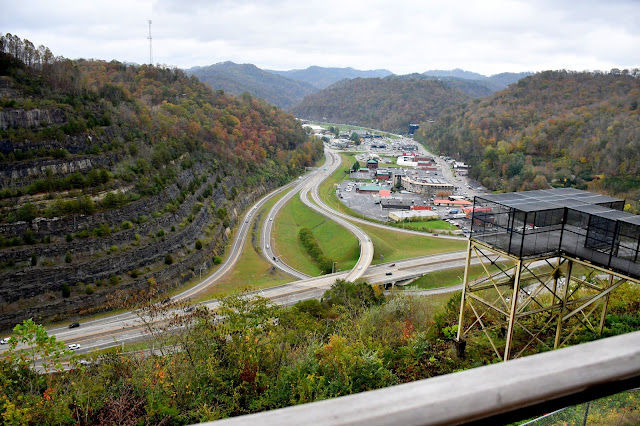

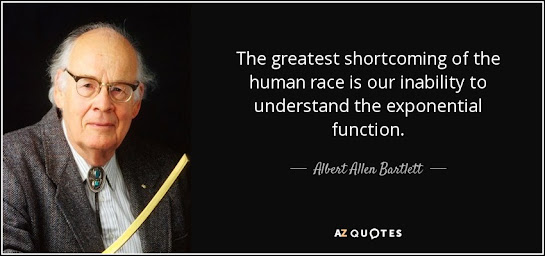
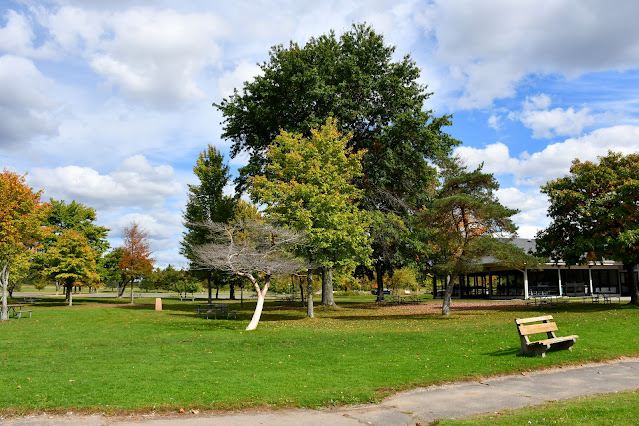


Another predicament Americans face is that of space to wonder in nature, especially east of the Mississippi. State parks have fees, boundaries, rules, closures, which prevent getting too close to nature, which is exactly what humans need. But a few can ruin it for rest of us and population overshoot does not help. So today we have surveillance on everyone. The national and local parks follow this same script. This is our parallel predicament.
ReplyDeleteFredd, I agree with the essential tonic of awe and relational way of life. But because we (our society) is built upon seeing ourselves as separate from “nature”, we have long treated “untouched” natural systems as a luxury, not essential to our health. We also are woefully unprepared for the now-upon-us scramble to access any and all of the mineral and energy “resources” that may be within the few sanctuaries that have survived. We’re beginning to witness this in real time, when our govt. (and corporate world — and I include shareholders) start using phrases like “National Security” to erase any limits on access within wilderness and fragile ecosystems, all our well-intended Nature Conservancies, etc. will be hard-pressed to preserve what’s left, because we will be (or are already being) convinced that it’s more important to “preserve” our modern industrialized way of life — which is of course, clearly unsustainable.
Delete