Adaptation Will Be Futile

Many times recently and over the past 6 years, I have despaired over people not understanding and comprehending certain things. More frequently than not, what I am referring to isn't so much those certain things in and of themselves (for instance, Liebig's Law of the Minimum, Jevons paradox, the lag effect, oceanic thermal inertia, civilizational inertia, etc.), but the relationships between those items and the systems they impact, and even more importantly, the lessons those relationships teach.
It's very similar to human relationships. How often do you hear about a couple who gets a divorce and within a few months one of the former partners is off on a new relationship? Not taking the time to allow the lessons learned from the relationship to sink in means that the most likely outcome is that that person will simply replay the exact same mistakes they executed in the old relationship all over again in the new relationship. This is likely to happen anyway, as most people rarely change their behavior, but at least this person could have had the wisdom to know better. Now, use this analogy and apply it to the situation as the disasters from ecological overshoot begin to pile up.
Lyle Lewis explains deeper in this article how this phenomenon works:
But the opposite may be closer to the truth. As crises multiply, they do not simply add together. They compete. Human attention is finite. That is not a moral failing. It is biology. For most of our evolutionary history, the problems that mattered were immediate, local, and relatively few. Predators. Drought. Rival groups. Illness. Cause and consequence remained close enough in time for experience to become understanding.
Modern civilization has changed the scale, speed, and number of the problems we face without changing the minds that must understand them."
The way this works is similar to how technology addiction has consequences in terms of attention span, and Lyle isn't the only one pointing out how adaptation will be futile. However, Lyle's message succinctly delivers the needed punch without the concomitant hopium that the video offers:
"Perhaps the defining scarcity of this century will not be information. We already possess more information than any society in history. The scarcity will be uninterrupted time—time long enough for information to become understanding, understanding to become adaptation, and adaptation to become resilience.
Without that time, ecosystems cannot fully adapt, institutions cannot learn, and societies cannot clearly understand what is happening to them.
The world does not need to conceal the crisis from us.
It only needs to change faster than we can put the pieces together."
Without that time, ecosystems cannot fully adapt, institutions cannot learn, and societies cannot clearly understand what is happening to them.
The world does not need to conceal the crisis from us.
It only needs to change faster than we can put the pieces together."
For a more realistic perspective in video format, it's hard to beat Bill McQuire here. I do find it somewhat uplifting that there are scientists out there not beating the reductionism hopium drum constantly. In another uplifting quote, I recently saw this picture on a friend's timeline depicting an exchange between the late Wendell Berry and Tim DeChristopher:

I couldn't say it any better - Live Now! That's why I still write these articles. Certainly I could find other things to spend my time doing, and in due time, I'm sure that I will. But for now, this still feels very important to me. Every time I think that maybe it is time to hang up these ramblings, I think back to the times when I needed something like this - when I needed someone older and wiser who understood what I was just beginning to comprehend - that there was no "solution" to the predicaments we face. All of us need help with acceptance at one point or another. This brings us back to relationships.
As I pointed out at the top of this article, many people make the mistake of repeating the same behaviors over and over while expecting a different result. Everyone knows someone who has suffered from an addiction of one kind or another, perhaps with a drug such as alcohol or nicotine or perhaps with something else like gambling. But every single one of us who can see this article suffers from our collective addiction of technology. Look around you at the folks who actually think that technology will somehow "save us." Apply the knowledge you now have - that technology use is actually the source of the predicaments we face. There it is - the very same behavior that you, I, and everyone else that we know - employ every single day of our lives. That technology use that is constantly hyped in every single commercial, advertisement, and marketing material that you see is what is driving the train of civilization over and off the Seneca Cliff.
Now, add in the new fact that you just learned today - that adaptation, which many people previously believed would "save" us, is every bit as maladaptive as technology use. Take a look around and see how well adaptation has worked so far. How many homes have been destroyed by flooding or wildfires or landslides or debris flows? How many people are now dying from diseases that were previously "wiped out" by vaccines, antibiotics, and modern sanitation? How many people are starving? Once again, when habitat runs out, there is no such thing as adaptation. Habitat for 8.3 billion of us ultimately depends upon civilization, which is based on technology use, the behavior which is killing us. Civilization is collapsing now and industrial civilization will fully collapse before 2050.
I personally got caught up in the whole adaptation bug myself. Solar panels, batteries, power inverters, water tanks, raised gardens, fire resistance, tornado resistance, and on and on. Of course, as the years went by and I began to apply the information I have learned, I also began to see the futility of it all. Without a functioning electrical grid, there will also be no global supply chain, meaning that repair parts for a solar system (and everything else that today we just take for granted can be fixed, repaired, or replaced) will become unobtainable. The systems that surround us and currently provide habitat for us are breaking down. I wrote an article two and a half years ago delineating carbon sinks turning to carbon sources, and a new study shows mature New Hampshire forest turned from carbon sink to source between 2004 and 2023 and carbon release is increasing through respiration. Here's yet another example of ecological collapse happening right in front of our eyes. A person like me staying up-to-date on the latest science can easily determine our lack of agency and utter inability to be able to deal with these realities as time moves forward.
Needless to say, I finally realized that hardening my property against tornadoes, wildfires, flooding, potable water loss, loss of food, etc. was not only an impossible task, it also still relied on all the systems surrounding me to remain intact as well. The only trouble is that they are not going to remain intact. So, all those fancy plans to continue living as I do today was just pure hubris. Now, that being said, I still didn't "give up" like those who accuse us of doomism often claim.
I instead lowered my expectations and continued working on what I can. People talk about storing food and this is a very wise action to take. My advice is not to take it to extremes. Don't put all your eggs in one basket. A tornado or wildfire or flood can render your entire investment moot. I know a few preppers who have spent years working on building up a farmstead or "doomstead" as some call it. I recall one couple who got wiped out in a wildfire. They couldn't afford insurance, so their entire investment went up in flames. Others spent two decades or more building up such a place only to lose it when one or both of them developed cancer or some other disease. Some couples wound up having to liquidate their assets when they decided to call it quits on their relationship.
There are countless examples of folks who thought things would be a certain way who never counted on conditions differing extremely from how things are today or how they were yesterday. Try to stay as flexible as possible is the general rule of thumb. As soon as one makes specific plans for a given condition, it can be more or less guaranteed that said condition will change, rendering the whole plan moot. Innumerable people and groups have spent huge amounts of energy and money on projects which, in the end, prove to have once again depended upon conditions remaining like those of today, yet we have known for decades that those conditions cannot stay like today. None are so blind as those who refuse to see.
Part of lowering my expectations includes becoming unattached to the outcome of the predicaments we face. Last month on one of my articles, a comment made talks about how "peace is not going to be achieved during massive degradation and eventual die-off. Inner bliss is not going to come wafting out of droughts and floods and genocides and economic depression and idiot politics." The commenter is most likely correct for most people. I don't like what is coming any more than anybody else, but I realize that I ultimately have little or no control over the outcomes of the predicaments we face. As such, it is important not to spend too much time in the phases of grief; especially in the anger department. That usually winds up going into the blame game, which is counterproductive. Using Stoicism, one can gain the capacity to limit time spent grieving by using logic to gain acceptance. While I agree that peace is going to be difficult to attain, keeping it as a constant goal and letting go of unachievable goals is good for one's mental health.
George Carlin showed us how to become unattached to outcome. He was an icon, both in wisdom and humor. Hat tip to Tom Austin for the video. In terms of life, we can let go or be dragged. I've posted these pictures elsewhere on this blog, some in multiple articles:


Once one sees the truth about the predicaments we face and accepts that reality for precisely what it is - who and what we are as a species - one stops wasting time and energy hoping and wishing for that which cannot be. This is the enlightenment I want for others (which is why I continue writing these articles and offer them for free). It took many years for me to be able to "see" this. I continue to have to remind myself of all of this quite regularly. Despite that, I often find myself saying something similar to, "It was always going to turn out this way." Anything else is nothing more than wishful and magical thinking. Knowing this means that now is the time to get out there and Live Now! You're damned if you do and damned if you don't, so definitely DO!
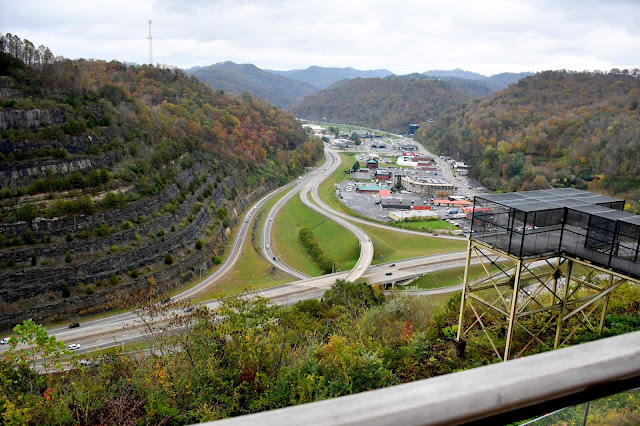
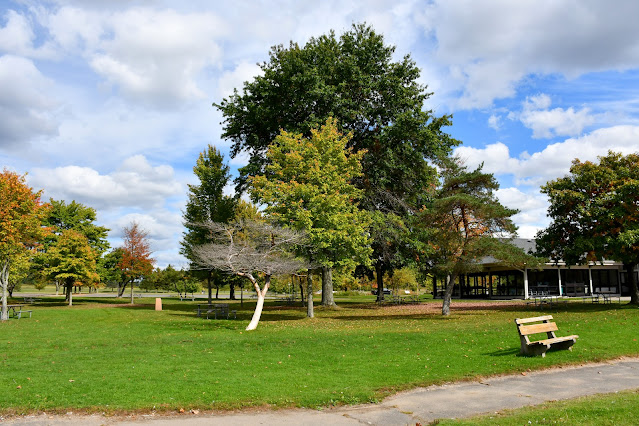
Now it's time for some inspiration from Raymond B. Winter and North Bend State Parks and Guernsey Power Station and Cherry Ridge Park!




Comments
Post a Comment