Is Our Way of Life Wrong?

Lexie enjoying the view from Whiteface Mountain in the Adirondacks of New York
Over the years, I have come to many unsettling conclusions about the way we live. I still have so many questions, such as, why we live the way we do. Think about it for a moment - why are we the only species that sees any need for money? Why is the work week 40 hours? Knowing that civilization is unsustainable, why do we continue living within it? Now that we have domesticated ourselves, the primary reason is that we can no longer survive without it. There are some Indigenous tribes who still live outside of civilization, but those of us within civilization would most likely not enjoy being disconnected from most everyone we know and living the way that the Indigenous do. On the other hand, there most likely would be some folks who actually enjoy living that way better than within civilization, and there is plenty of historical evidence of this. Civilized folks who were given a taste of living with Indigenous tribes often returned to that lifestyle whereas those who lived an Indigenous lifestyle most frequently likewise returned to it after being subjected to living within civilization.
At the end of the day, once one really seriously considers it, our way of life is purely wrong ecologically. Civilization requires violence in order to maintain it. Not that I ever doubted what Derrick Jensen says about civilization, but when I first encountered his writings and media, I was stunned. Back then, I was still in denial about many things. I suppose we all are rather naïve about the way we live. The ideas that Jensen expresses are so true that they are revolutionary, and when one first experiences them, they can be somewhat scary. Yet, how can anyone come to a different conclusion given all the variables and circumstances? (At the end of this article is a link to download Richard Adrian Reese's book, Wild, Free, and Happy, which proves this point beyond any shadow of a doubt.)
Why do we place ourselves at the top of everything as if we are the most intelligent species? If we are (supposedly) the most intelligent of species, then why are we literally destroying our only home and all the other species living here? Why have we caused the mass extinction we are currently in? Looking at the past 15 years, despite all the knowledge I've gained peering into the predicament of ecological overshoot, I have come up with more questions than answers in many respects.
I need to make clear that despite my constant talk of Indigenous ways of living, they were not really sustainable either. While I previously already understood this, my finishing of Wild, Free, and Happy made me even more aware of just how unsustainable our species has been throughout its entire history. Certainly, Indigenous ways of living have a far smaller ecological footprint than the typical person living within civilization today, but there were still plenty of diatribes about the wiping out of the megafauna and discussion of much waste through overhunting. So, just because I bring up Indigenous ways of living repeatedly doesn't mean that I have put them on a pedestal; I'm simply comparing their ways of living with ours in industrial society.
It was strangely familiar when I listened to this conversation with Chris Ryan and Tom Murphy. Here is the post on the Do The Math blogsite. His reaction to discovering the unfortunate facts surrounding the predicaments we face was very similar to mine. The two podcasts are very enlightening.
The one answer I am absolutely certain about is that which I expressed above - our way of life is just flat out wrong. Opting out to the extent possible of this way of life is the only correct way to go about it. Why participate in the continuation of the extinction of species and then attempt to "restore" the damage we've done in the process? Is restoration even truly possible? Can we really "save" other species or are we fooling ourselves into thinking we can? If one is truly interested in developing a sustainable way of living, why continue civilization?
How can a person continue to subject himself or herself to doing a job which inevitably serves only our interests within this world to the exclusion of most all other species? Is doing so the epitome of ignorance, hubris, and stupidity? Think about it - are we running towards life or running away from death? If we are so ingenious, what is preventing us from figuring out how to live life in a better way?
Some of my thoughts today have been inspired by an article by Lav Kelley which explains a special type of grief. Many of us have suffered this type of grief after learning of the predicaments we face, knowing that conditions will not get better and that potential plans we might have entertained before understanding all of this can no longer be given credence now. It truly is a bitter pill to swallow.
As I mentioned in my last article, I chose to embrace degrowth because I saw no other alternative that fit with both the idea of reducing technology use and my own personal circumstances (especially the ethics of that which is right, from a sustainability perspective).
Most people, on the other hand, either attempt to improve their situation financially by earning more money (which concomitantly increases their spending and in turn, their ecological footprint) or building more assets (which require more maintenance, again, increasing their ecological footprint). Increasing overshoot, unfortunately, takes the system in the wrong direction. Reducing overshoot is what is needed, not the opposite. One cannot do that by increasing the amount of money they have nor by increasing the amount of assets they have. I realize that this goes against most people's self-interest, but this is because they are only thinking in short-term qualities.
In just a quarter century, industrial civilization will pretty much be toast if not before then. That money and those assets will not have helped much because the money will be fairly useless because the value of it was always based on surplus energy in the first place. Without much surplus energy to go around, there won't be much to buy. The only assets that will be of much use are hand tools or other items that don't require fossil fuels or electricity for their use, maintenance, and storage.
So, many people who talk about and promote degrowth are, in reality, huge hypocrites. Few have truly changed their behavior at all - they simply want everyone else to change their ways. This, unfortunately, is true for many ideas brought up as "solutions" to one's favorite predicament, usually a single symptom predicament and not overshoot, the predicament causing it all. There's nothing wrong about being supportive of a particular idea. But when one presents it as the "cure-all solution" to a predicament, he or she is really only fooling himself or herself. Not even degrowth is a cure-all. Ending the unsustainable living system of civilization is the only way to sustainability, and even then, it cannot end the irreversible (on human time scales) changes to the planet we have instituted with symptom predicaments such as energy and resource decline, climate change, ocean acidification, cryosphere loss, biodiversity decline, extinction, etc.
I know two people who have changed their lifestyles significantly; who truly walk the talk, so to speak. What they have done is admirable! Few will follow in their footsteps until forced to by energy and resource decline. Because we are all connected to each other and all the other species on this wonderful planet, practically all of us are going to go down in this mass extinction, which is just beginning to ramp up (as are the other symptom predicaments of overshoot). The Great Depression will seem like a walk in the park by comparison.
I continue to see lots of ridiculous ideas that demonstrate lack of acceptance, one in particular that caused a chuckle and deep sigh. The huge trouble with his claim here lay in the wrong logic he is using. Attempting to find hope in a hopeless predicament is a waste of time. What is needed instead is the courage to find acceptance. Even if a meta-political response was forthcoming, what specifically would change? As long as the systems surrounding us are unsustainable, a changing political landscape essentially changes nothing. No political solution was ever, is ever, or ever will be possible because the predicament we face cannot be "solved" with politics (or anything else for that matter since it is not a problem). Dave Pollard dispenses with this nonsense here, quote:
While I understand the semantics of such a proposal, I see little reason to see any advantage in such a response. Unfortunately, the cultural narratives spinning around the predicaments we face often reflect the societal lack of acceptance and have much to do with seeking reassuring lies and comfort than anything else. In this sense, comfort means not wanting to make the severe changes that would be necessary in order to improve the outcome of these predicaments. In a new article, Lyle Lewis makes it plainly clear that this isn't even an option, quote:
All that remains is to bear witness; to understand what it means to live in the final stages of the unmaking of the world. In truth, every hominin of the last 2.5 million years has lived somewhere along this descent; life will go on, but not the life we’ve known. We’re simply witnesses to its undoing."
In October, I finished two more books I had been working on for quite some time - Braiding Sweetgrass by Robin Wall Kimmerer and Wild, Free, and Happy by Richard Adrian Reese (that link gives you a FREE PDF download courtesy of Steve Bull). I wrote down some notes as I read them and will provide a review in an upcoming article. For now, let's just say that the overview of both books confirms most everything I have been writing about for years now. Reese's book also agrees with what Lewis and Pollard wrote above.
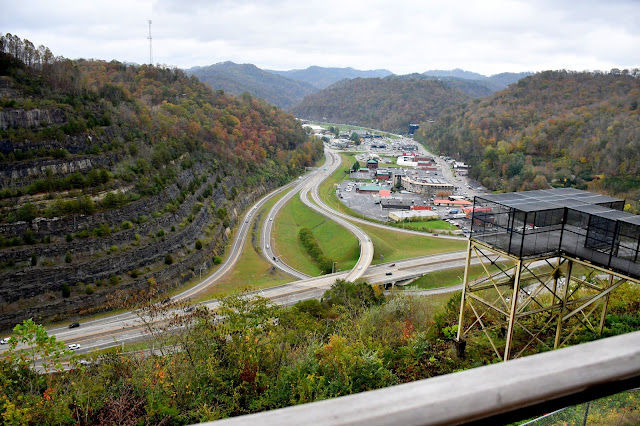
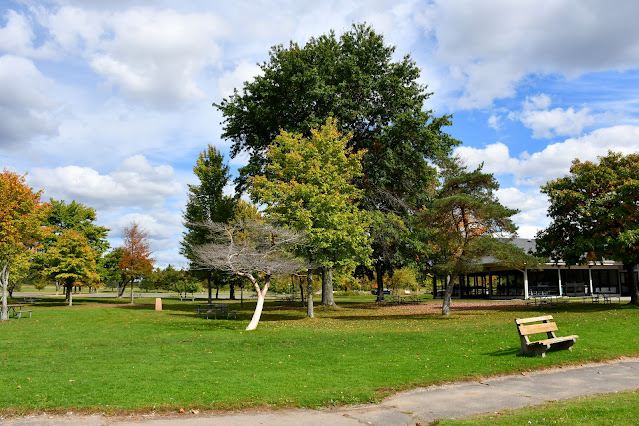
I hope everyone who celebrates Thanksgiving had a wonderful holiday weekend and I'm sending my best wishes for an excellent holiday season this month as well. Here's my invitation to take a moment out of your schedule for some eye candy enjoyment with Douthat State Park and Virginia Farm and Dan Ingalls Overlook.





I've come to realise that there is no wrong way, unless one first specifies what goal one is trying to reach. However, as perhaps Lyle hinted at, humans are simply doing what all species do in consuming what they need to survive and prosper. Humans have evolved particularly keen abilities to do just that. Overshoot was inevitable and will be corrected by nature eventually, as it always is.
ReplyDeleteI'd be interested to know how those two people you know who have opted out of modernity survive? Do they use nothing that modernity provides at all? If not, then they haven't really opted out. Many so-called indigenous peoples also rely on modernity (e.g. for some clothing and tools or weapons) but there are some small groups who don't. Yet. You could be right that no humans have lived sustainably but I suspect the first ones who could be described as humans probably got pretty damned close, until the first digging stick was invented.
I don't think ANYONE who has opted out to the extent possible has REALLY opted out of modernity. Unless one was ready and willing to join an isolated Indigenous tribe, one wouldn't be able to survive without modernity. How would one obtain clothes, water, food, and medicines? Still, I give them credit for living on a much lower ecological footprint than most people. That is probably the best that is possible at this point.
DeleteMost of us cannot live outside "civilization" and our jobs, because the entire nation/ world is set up to require money to live, and there is not enough of the natural world left to support humanity living on farms or in hunter gatherer societies. In addition a huge percentage of the so-called "civilized" countries are on medications, legal or illegal that they cannot live without. I would love to live outside "civilization" and the money economy, but I can't figure out how - ironically, it takes money to get out of the job/ money world.
ReplyDeleteI've had the pdf of Wild, Free & Happy sitting on my desktop forever, ever since Reese finished it (a couple of years back?). I loved reading excerpts as he published them but I'm having a really hard time opening the pdf. I can read blogposts online but I don't do kindle (yet) & so far I prefer real live books with paper pages I can turn. I want a Wild, Free & Happy I can add to the stack on my bedside table!
ReplyDeleteThank you, Erik, for asking these most vital and seldom explored questions. Yes, we inherited and were born into ways of living, thinking, and being that are just plain wrong--or we could more gently say, "misconceived" and "misguided." (What are the standards for "right" and "wrong" and who can rightfully set them?--we could say Gaia or Nature/Earth is always right and humans are wrong unless they are directed by Her.) We did not create modern industrial civilization, although we seem to be inescapably complicit within it. Can we opt out? Just the fact that we are interacting here on the internet signifies that none of us have, although some of us have tried and are still hoping to do it. The closest that I ever came to opting out was in 1970, for about six months, when I was an 18-year old living on a commune with no electricity in the Cascade Mountains of northern Washington. After I retired from an academic career in 2018, we began the quest again, on the 5 acres that we have been living with these past forty years. We gather or cultivate about 55% of the food we eat, rarely go anywhere and minimize our use of money. We would like to go further but we seem to keep bumping into the walls of habit, convenience, and the limits of what we have not yet learned.
ReplyDeleteI'll just briefly add here that I also have written a few things about opting out on my blog, Learning Earthways, https://learningearthways.net/ See especially, "The End of Money," "Paths Forward...," and "Natural Consequences...".
DeleteThanks George; much appreciated!
Delete