What is Eremition?

Ausable Chasm, New York
Let's start this article out with a poem by Jayasree Srivastava:
Are We There Yet?
Is truly a path so well trodden upon
Did it start with discovering fire
More than a million years ago
Or is that just a tale we’re told?
Our ancestors retelling stories of hunts
And fights in a language quite limited
Yet its vocabulary slowly growing
Dreaming of a life less nomadic
Tilling and sowing they mastered
Settling marked the age Neolithic
When first they discovered fire
Which could dramatically be lit at will
Our ancient ancestors proudly took
The first steps in their journey that
Held the sparks of a vision so bold it
Had them reaching for unfamiliar control
Or were they content to huddle in caves
Imprinting walls with palms dyed in orange clay
And the juice of boiled leaves; lighting
The way with a vision, while
Keeping cold nights at bay as they
Warded off scary, woolly mammoths
Fashioning clubs and spears
To help keep growling bellies filled
Their expanding brains could
Fashion sounds imbued with meaning
In languages ever multiplying
Sometimes in cacophonous confusion
Yet communicating beyond tribal boundaries
Then they moved in leaps and bounds
Moving from caves to villages and
Onwards to towns, small cities, metropolitan ones
First walking, then on horseback and carriages
Sometimes on camels, yaks and donkeys
Eventually on steam locomotives and
Petrol fueled vehicles which gave way to Electric vehicles that promised a greener future
Not just nomadic herders but also settlers
Learning techniques of grain storage in
Community, to build buffers for seasons dry
And forging collective bonds that
Built unshakable fellowships and
Became the essential beginnings
Of pastoral protection groups that
Fended off marauding neighbors
And so these communities and villages grew into
Towns that expanded into cities
Which in turn exploded into metropolises
As time marched on from before the common era
Running a sprint as it reached the end of the
First quarter of the twenty first century
And the way of the world was well entrenched by then
In global, capitalistic mega-corporations’ control
And money had moved from a simple medium of
Exchange, to being itself a commodity to trade
While every product and service was for sale
So humans too had to sell themselves
In a frantic attempt to remain productive, efficient
And far ahead of their peers in the highly distracting
Rat race which promised the achievement of every
Dream; even the impossible ones which forced
Us to hold untenable paradoxes such as
The Wellness Industry or the paid schools of
Spirituality - because why shouldn’t your
Souls be shined by gurus who may well be
Fakes pretending to be wise, knowledgeable and
Offering the path to transcendence
So where are we today? On the march towards
Exponential progress - are we there yet?
When will development ever be enough?
When will we learn that infinite growth is
Impossible on a finite planet? That what we call
Natural resources are in fact elements of our
Living, breathing planet, Mother Earth
That in all this growth, civilisation and endless clear
Cutting of old growth forests and endless
Excavations to mine newer and newer minerals
And rare earths, we are only plying our axes
On own collective feet, leaving us not only fallen
Flat in the mud on our faces, but also having
Driven our more-than-human kin to extinction
While ourselves finding it normal to live in terror
At the prospect of a nuclear World War III
That will leave our grandchildren’s home a radioactive wasteland
This hubris we have been gifted by the same
Universal energies that allowed us to emerge
As a species that considers itself exalted beyond
All other life forms. All of this to our severe detriment
And the degradation of all life that shares our home.
Is it too late to hope that we might learn
To slow down, to drastically reduce collective
Consumption, to understand the difference
Between knowledge that we frantically cram
In to our already bursting-to-the-brim brains
And wisdom, which reminds us to become
Softer, gentler, kinder and more patient
Over and over reminding us to breathe
And notice that the breath is that shining thread
That weaves together the tapestry of all
Life - past, present, and future - on this resplendent earth.
This is basically part two of Walking Away and Opting Out. I left you last time with a couple of rather poignant videos encouraging you to opt out of the constant hype and noise and chaos of the modern-day societal grind. Here's yet another video featuring similar content along the same theme. The one set of circumstances I have repeated here over and over again is that most people are still asleep and until they are actually ready to wake up, one cannot get any of the facts I make available across to them. A person must be ready to accept things that many people will see as unacceptable. One must be ready to "see" things that cannot be "unseen." One must be ready to understand the addictions of industrial civilization.
Perhaps this video highlighting some really good points about urban and suburban living when SHTF will help those not really familiar with the negatives of civilization to be able to see what will become obvious pitfalls after watching the video. I think most of us know many of these points already, but there were a couple I hadn't given much thought to before viewing.
I have found that even those who have a pretty comprehensive understanding of ecological overshoot hesitate to accept the reality that we are going extinct. For a long time, I was in that same camp. It has been my studying further into extinction in general and mass extinctions more specifically, and looking at the evidence regarding the rate of change and trajectory of the Great Acceleration combined with my knowledge about climate change (see Denial of Reality and The Busy Worker's Handbook to the Apocalypse) that is responsible for my acceptance.
Recently, I came across yet some more analyses from LLMs such as ChatGPT and Grok. After reading through the material and typical of AI, I came up with realization that most people who have been studying overshoot for a long time would come up with more thorough and probably more accurate analyses than LLMs. The trouble I see is the same narratives pervade the LLM world as they do in human society. For instance, one analysis claimed that the possibility of human extinction wasn't zero but was quite low. In a different paragraph, the model claimed that pollution loading, ocean warming, and ocean acidification was extirpating species and that 50% of marine life would be extinct by 2070. I almost laughed despite there being nothing funny about such a projection. But keep in mind that 20 years ago, one study found that the oceans would be empty of seafood by 2048; and while that claim has been widely discredited, new research shows that in actuality, those numbers appear to be somewhat on target. My point is that many assumptions can be wrapped up in projections 4 decades away yet. Another flaw in the LLM analyses is that many of them are still citing old material that is already out-of-date. This one mentioned 6 out of 9 planetary boundaries crossed when that is already more than 6 months out-of-date - 7 of 9 boundaries have now been crossed, with the latest boundary being ocean acidification.
I could go on and on pointing to flaws, blind spots, narratives, and incorrect assumptions based on today's conditions that both LLMs and humans make, but suffice it to say that nobody can be 100% certain of anything specific whereas certain generalities can be clearly stated and relied upon as being accurate. For instance, nobody can say that humans will be extinct by "X" date. Many people believe in the narrative that we will go through a "population bottleneck" where our species may drop to an extremely low number that we might recover from. I actually do think this is a likely possibility, with the caveat that this then allows for increased energy and resource use in such a recovery that then seals our fate by removing the basis of our existence permanently.
The bottom line is that climate change, energy and resource decline, biodiversity decline, extinction, etc. aren't going to suddenly stop just because population numbers decline. Unless humans change our behavior dramatically, and then maintain that behavior (highly unlikely), I just don't see a long-term recovery possible. Most of these changes being caused by our behavior of technology use causing ecological overshoot are now on a planetary scale and in terms of recovery, we're looking at geological timescales required. This means that a long-term recovery from a bottleneck would only be possible if we stopped our habits of innovation and technology use. How likely is such a prospect in reality?
I actually saw one person's Substack talk about recovering from overshoot and climate change in one human generation. For anyone with extensive knowledge about overshoot, this is completely laughable, unrealistic, and loaded with optimism bias that veers into fantasy. I understand the desire for such a narrative, but also know that it just isn't in the cards. That article was written 5 years ago, and the website which contained the information my article is about is no longer available. There is still some information here on his Facebook page, which does link to this inspirational video which veers into the same fantasies and magical thinking that his idea was based upon. Some parts of his idea were actually possible, but scaling it up to what would be required to voluntarily reduce overshoot and co-create heaven on earth, while a good marketing ploy, was about as realistic as going to Mars...it wasn't and isn't.
As William E. Rees clearly states here, "We are not, as a species, predisposed to holding back. There's no evidence that any society ever, anywhere, has voluntarily as a whole, gone to voluntary simplicity from a situation of relative prosperity."
In that video, Bill points to exactly what I have been saying for years. That despite all the handwaving, frustration, backroom deals, and COP meetings, quite literally nothing has changed. People talk about all the "climate progress" going on and I'm like, "Progress? What progress? The numbers aren't going down. They're STILL going the wrong way after all these years!" But even worse, it isn't limited to "climate progress" or "conservation progress" or any other type of so-called "progress." The narrative stretches to claim success from emptiness, as is typical of human supremacy and exceptionalism.
Once again, however, I am faced with the same information and knowledge that I pointed out in the first paragraph of this article. While it does matter what I publish here, it will not change the trajectories involved in the predicaments we face. We don't even really fully understand any of the symptoms of overshoot (never mind overshoot itself), as I pointed out in my article about hyperobjects, let alone have any ability to control them.
Many of us can now see where we are headed and can make better assessments and decisions based around where and on what we want to spend our time and energy. This is a longer read, but if you want to get a head start on things, then check out this article from Adrian Lambert, which goes into detail on how neurodivergence can detect patterns that neurotypical individuals will miss (because they focus on unity and/or conformance with social standards). He points out how people like me don't "obsess" over issues that present hypocrisy or contradiction, but rather we simply remain with those issues until they are either resolved or no longer present inconsistency. Adrian presses further here:
"Some individuals perceive systemic failure earlier because their cognition is less stabilised by social consensus and institutional legitimacy.
Seeing early does not make you responsible for the future; it makes it possible to leave the past sooner."
This all leads us into the simple reality that everything that we thought we knew about how the world works has been turned upside down. The carbon sinks we once depended upon to hold climate change to a minimum, the biodiversity that once held rare diseases in check, the fertility and abundance of healthy soils which grows our food, the minerals and materials that allow us to build and construct, and much, much more are all disappearing and/or changing into working differently. What so many people don't realize is that these platforms (civilization, modern infrastructure, agriculture, biodiversity, etc.) which support our very existence are already marked for death and disappearing beneath our feet. William Finnegan explains this in a geopolitical manner, but it's a great comparison for the actuality of this article.
One more video before closing - this one is about quitting the rat race and beginning to focus on real, actual needs and not wants brought about by clever marketing. Few people actually have any idea what life was like 125 years ago and what has taken place since then. Basically, an enclosure of sorts is what took place. This is the same tactic taking place now, getting people to purchase cloud computing rather than using one's own computer, various pay-to-play apps and programs such as Microsoft Office, Epicor, DocStar, and all sorts of other digital subscription services providing internet service, streaming services, cell services, and more. Does one really need all these services? If one runs a business today, then the answer is often yes. Otherwise, the answer is no. Often, many of these services introduce invasive surveillance and/or marketing and advertising along with the service - forcing subscribers into agreeing to terms and conditions they otherwise would never accept.
The good part (if there is any such thing) about all of this is that due to collapse, many people will soon no longer be able to afford these services anyway and with the closing of businesses as many go bankrupt or simply close because they cannot turn a profit, many of these services will likewise collapse. In my neck of the woods, this is increasingly happening to all types of businesses, although restaurants and other businesses focusing on entertainment and food services seem to be the most impacted - any business which depends on peoples' discretionary income.
One last topic to cover in this article is eremition; basically the topic of my last article and this one. Eremition (see also Eremition: Take Two) is a newer term for the act of withdrawing or retreating from society (walking away and opting out), often for spiritual renewal, deep reflection, or recharging, described as a gentle fading out rather than a malicious departure, rooted in the concept of a hermit's solitude but applied to modern life for self-care and inner peace. It signifies a conscious, mature choice to find stillness and clarity away from constant stimulation, allowing for deep personal restoration before returning to the world with renewed energy. This might just be what the doctor ordered!
Before closing, I lost a friend recently that many of you might know. Tristan Sykes was widely known in our community as part of Just Collapse. May he rest in peace forevermore. Sandy Schoelles of Environmental Coffeehouse made this wonderful tribute to our friend:
Tristan's family is seeking contributions for his memorial and cremation expenses. If you can help, here is the fundraiser.
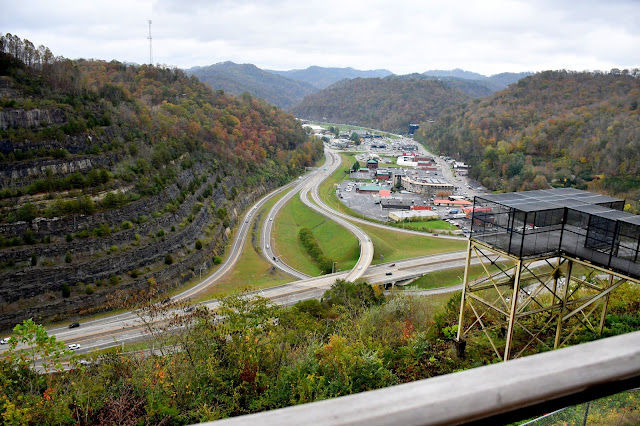
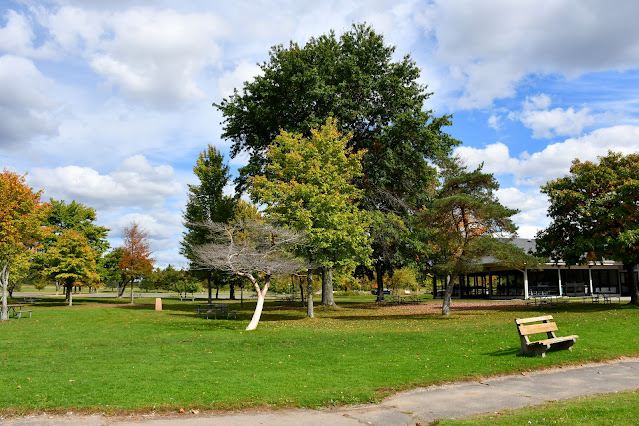
To close this out, my trips are a form of eremition; although I'm not typically by myself the whole time. Speaking of trips, here are a couple more entries from my jaunts; Seven Pillars and Northern Indiana and Hills Creek State Park!





Another reality based post. Thanks.
ReplyDeleteBut I was a little confused by this bit: "Unless [we] humans change our behavior dramatically, and then maintain that behavior (highly unlikely), I just don't see a long-term recovery possible."
What sort of recovery are you thinking of? And what kind of behavioural changes do you think would be necessary?
Below it I made this comment: "This means that a long-term recovery from a bottleneck would only be possible if we stopped our habits of innovation and technology use. How likely is such a prospect in reality?"
DeleteWhile it is true that we will be severely limited on what kind of technology use will be possible in the future due to energy and resource decline, how likely is it that we would curtail our habit of innovation (which is why we developed technology in the first place)? I just don't see any ability for us to effectively change WHO and WHAT we are as a species. Many people entertain romantic notions of who we were before civilization was developed (see: https://dothemath.ucsd.edu/2023/09/the-dawn-of-everything/), but I see the roots in the archaeological evidence of the same violence and unsustainable behaviors that have followed us throughout our evolution as a species. The only differences are scale.
I largely agree. So "recovery" just means some societal stability, even if "society" means small tribal groups? Definitely what we call technology won't be possible at all. The behavioural changes you allude to will happen anyway.
DeleteIn a future post I was wondering if you could speak to the use of the word "community". It seems to me the word is being use wrongly most of the time. Just what is community? My bank pushes "the community bank." But also "The Community Legal Defense Fund" pushes community. Neither in my mine are true communities. Your thoughts?
ReplyDeleteHi Fredd,
DeleteSure, I can address this in a future article. But to answer your question right now, the word "society" is used to describe a structured, often large group of people sharing a geographic territory, culture, and social institutions, organized to facilitate cooperation, survival, and interaction. It acts as a network of relationships defined by shared norms, values, and, often, a common government. Key components include social, economic, and cultural systems that evolve over time.
Notice how economic system concerns are not only a part of society, but one of the main systems focused on.
On the other hand, the word "community" is used (in this sense) to describe a group of people living together in the same way a society does but without the same economic and government systems concerns (the trappings of civilization). I like to think of a community as a North American Indian tribe; generally limited to Dunbar's Number (150 people or less), functioning similarly to a small town in today's world but without the governmental and financial interests and organization (hierarchical and patriarchal).
So, in this regard, you are absolutely correct that the modern use of the word "community" is more of a narrative used in an attempt to get people to think of things which are more often than not "anti-community" (such as banks and other financial institutions) in a more positive manner.
Thanks, the book on the Amazon tribe got my head spinning. Also my wife is from Br. with 5k beautiful ac. and almost no oversight. I am concerned it will be lost.
ReplyDelete