Collapse is Being Hastened

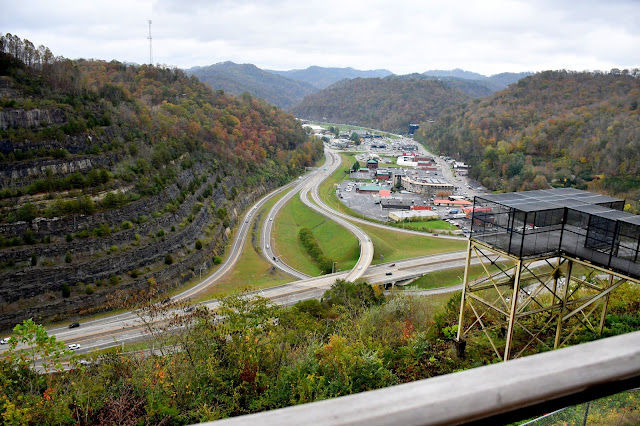
Beacon Heights Overlook, North Carolina
Before I get into the nitty gritty details of this short article, I need to make clear that I get comments in a number of places which I post my articles. So, comments aren't limited to just here. Social media means comments are strewn far and wide and I never see them all. Occasionally, however, I do catch some that seem out of touch with reality. Because the first part of this article is about comments on my material, most all of this part can be taken with a grain of salt.
Fairly frequently I get comments that don't meet the posting criteria and they are deleted either before I see them or get deleted as the process unfolds. See Special Notes for details regarding comments.
Onto more pertinent developments...this article is just a short one, delineating a few points I think need reiterating about our ongoing collapse. These points came into view after my other articles prior to this one were already scheduled to be published, which is the only reason I decided to add this one.
I am constantly coming across more and more evidence of our current carbon sinks turning into sources. We're not talking just land carbon sinks (such as trees), either. Ocean carbon sinks are also being affected, as seen in this article which demonstrates that future ocean warming may cause large reductions in Prochlorococcus biomass and productivity. Less phytoplankton mean less carbon sequestration. Even worse is this article which shows overestimated natural biological nitrogen fixation translates to an exaggerated CO2 fertilization effect in Earth system models.
When I say that we are going extinct and I don't add a qualifier such as "may" in it, it is because I am certain of this outcome. I didn't come to this conclusion because I am special or because I have information not available to the general public. I came to this conclusion by studying the trajectories involved and understanding our lack of agency and our inability to change direction of those trajectories. Few people analyze the conditions for our continued existence and how they are changing. Notice that I make no prediction of a timeline. This is precisely why I see no need for me to put qualifiers here. There are many who disagree with me, and everyone is entitled to his or her own opinion. I have posted plenty of studies, books, and science to provide proof of my argument and I feel no obligation to continue providing more; if I find something interesting to add to the mix, I generally will post it here.
I do roughly agree with some timelines for other outcomes predicted by others, such as the collapse of industrial civilization, and as such, this would suggest that human extinction would come after such a scenario. Something as complex as the extinction of our species cannot accurately be given a specific date in my mind nor can it be attributed to any particular predicament that we face. Will we go extinct due to climate change? Will we go extinct due to pollution loading and an inability to reproduce? Will we go extinct due to energy and resource decline? Will we go extinct due to a nuclear winter? Or will we go extinct due to an as yet unseen predicament such as a proliferation of AI? Or will we go extinct due to a convergence of any or all of these?
These are all valid questions to be considered, and I think it is safe to conclude that it may not be possible to narrow the root cause down to anything other than our own behavior of innovation and technology use. In any case, collapse is currently being sped up considerably, as shown by two articles from Rob Mielcarski's un-Denial blog here and here about Hideaway's CACTUS theory, and a third article here by Shanaka Anslem Perera, explained in condensed version here, quote:
"Your paracetamol (acetaminophen) is 100 percent petrochemical. Phenol from the cumene process, converted to p-aminophenol, acetylated to the tablet in your bathroom cabinet. Your ibuprofen is 100 percent petrochemical. Isobutylbenzene and propionic acid derivatives. Your metformin, the most prescribed diabetes drug on Earth, is 80 to 90 percent petrochemical. Dicyandiamide from natural gas derivatives.
The naphtha that makes these drugs transits the Strait of Hormuz. The strait is mined, uninsured, and unescorted.
The war just reached the medicine cabinet. Nobody is covering this.
Ninety-nine percent of pharmaceutical feedstocks and reagents are petrochemical-derived according to the American Gas Association. Not 50 percent. Not 70. Ninety-nine. The pills are made of oil. The same oil the same strait carries. The same naphtha that becomes polyethylene for a bread bag becomes phenol for a paracetamol tablet. When the petrochemical cracker shuts, both products vanish.
The crackers are shutting. Chandra Asri declared force majeure on March 3rd. Yeochun NCC on March 4th. PCS Singapore on March 5. CNOOC-Shell Huizhou is planning shutdown of its 1.2-million-tonne facility. These are not contained within the plastics industry. They cascade into pharmaceuticals because the feedstocks are identical.
India is the pressure point. Twenty percent of the world’s generic drugs. Forty percent of US generic demand. And India’s methanol supply, a key solvent in API manufacturing, has 87.7 percent exposure to the Hormuz corridor. The Indian government has prioritised household LPG over industrial petrochemical feedstock, starving downstream pharmaceutical supply chains of the naphtha derivatives they need. Indian pharma companies hold three to six months of finished product stock. The buffer exists. It is depleting at an accelerating rate as raw material pipelines empty.
The Serum Institute of India, the world’s largest vaccine manufacturer supplying 40 to 50 percent of global doses in key categories, runs on the same petrochemical chain. mRNA vaccines require petrochemical-derived lipid nanoparticles and solvents. Traditional vaccines use petrochemical intermediates for adjuvants and stabilisers. Every vial is plastic. Every syringe is plastic. Every cold-chain packaging film is plastic. The force majeures that shut the crackers are not just a packaging story. They are a vaccine story.
The developing world’s access to affordable antibiotics, diabetes medication, cardiovascular drugs, and childhood vaccines runs through Indian manufacturing plants that run on petrochemical feedstocks that run through a 21-mile waterway currently seeded with Iranian mines.
This is the fourth domino. The first was energy. The second was fertiliser. The third was packaging. The fourth is the one that converts an economic crisis into a humanitarian one, because you can find an alternative bread wrapper. You cannot find an alternative to metformin for 537 million diabetics worldwide. You cannot find an alternative to amoxicillin for a child with pneumonia. You cannot find an alternative to the vaccines that prevent diseases we spent decades eliminating.
The Fed meets tomorrow to assess inflation driven by energy, fertiliser, packaging, and now pharmaceutical inputs. All repricing through the same chokepoint. Four dominoes. One strait. And the fourth, the medicine, is the one the market has not priced because it does not appear on any commodity index.
It appears on a doctor’s prescription."
The naphtha that makes these drugs transits the Strait of Hormuz. The strait is mined, uninsured, and unescorted.
The war just reached the medicine cabinet. Nobody is covering this.
Ninety-nine percent of pharmaceutical feedstocks and reagents are petrochemical-derived according to the American Gas Association. Not 50 percent. Not 70. Ninety-nine. The pills are made of oil. The same oil the same strait carries. The same naphtha that becomes polyethylene for a bread bag becomes phenol for a paracetamol tablet. When the petrochemical cracker shuts, both products vanish.
The crackers are shutting. Chandra Asri declared force majeure on March 3rd. Yeochun NCC on March 4th. PCS Singapore on March 5. CNOOC-Shell Huizhou is planning shutdown of its 1.2-million-tonne facility. These are not contained within the plastics industry. They cascade into pharmaceuticals because the feedstocks are identical.
India is the pressure point. Twenty percent of the world’s generic drugs. Forty percent of US generic demand. And India’s methanol supply, a key solvent in API manufacturing, has 87.7 percent exposure to the Hormuz corridor. The Indian government has prioritised household LPG over industrial petrochemical feedstock, starving downstream pharmaceutical supply chains of the naphtha derivatives they need. Indian pharma companies hold three to six months of finished product stock. The buffer exists. It is depleting at an accelerating rate as raw material pipelines empty.
The Serum Institute of India, the world’s largest vaccine manufacturer supplying 40 to 50 percent of global doses in key categories, runs on the same petrochemical chain. mRNA vaccines require petrochemical-derived lipid nanoparticles and solvents. Traditional vaccines use petrochemical intermediates for adjuvants and stabilisers. Every vial is plastic. Every syringe is plastic. Every cold-chain packaging film is plastic. The force majeures that shut the crackers are not just a packaging story. They are a vaccine story.
The developing world’s access to affordable antibiotics, diabetes medication, cardiovascular drugs, and childhood vaccines runs through Indian manufacturing plants that run on petrochemical feedstocks that run through a 21-mile waterway currently seeded with Iranian mines.
This is the fourth domino. The first was energy. The second was fertiliser. The third was packaging. The fourth is the one that converts an economic crisis into a humanitarian one, because you can find an alternative bread wrapper. You cannot find an alternative to metformin for 537 million diabetics worldwide. You cannot find an alternative to amoxicillin for a child with pneumonia. You cannot find an alternative to the vaccines that prevent diseases we spent decades eliminating.
The Fed meets tomorrow to assess inflation driven by energy, fertiliser, packaging, and now pharmaceutical inputs. All repricing through the same chokepoint. Four dominoes. One strait. And the fourth, the medicine, is the one the market has not priced because it does not appear on any commodity index.
It appears on a doctor’s prescription."
So, there you have it. Collapse may be on the cusp of accelerating quickly and previous narratives of a slowly fading away of civilization may no longer hold as much stock as previously thought, as pointed out by Balázs Matics here. This is the basic synopsis:
"1. Due to a physical lack of oil (especially diesel and maritime fuels and LNG), economic activity in Korea, Japan, India, Australia and many other Asian countries slowly grinds to a halt over the spring and summer. Plants shut down production of fertilizers, microchips, aluminum, cars, electronics etc. Mines in Australia stop producing iron ore, bauxite, lithium and coal.
2. Global shipping seizes up, further exacerbating the problem. Containers end up being stuck in the wrong port en masse. Transportation costs skyrocket, straining business and consumer budgets alike. Food prices begin to climb.
3. Shortages of parts and raw materials ripple through supply chains, and cause manufacturing plant shutdowns in Europe and all across the world, adding insult to injury caused by rising energy prices. China, thanks to its large safety stocks and integrated supply chains doesn’t suffer as much, but still loses significant revenue due to falling exports.
4. A wave of business bankruptcies from airlines to car manufacturers, pubs to small businesses begin. Unemployment starts to rise sharply.
5. Summer harvests come in poor due to a lack of fertilizer applied in the spring, especially in sub-Saharan Africa and Pakistan, causing riots there, and a massive food inflation elsewhere.
6. Global demand for oil collapses below supply, thanks to falling industrial and transportation activity, causing oil prices to sink below $60.
7. Financial markets rattle, private credit seizes up. The global economy enters a steep recession, eventually wiping out 10-15% of global GDP."

Of course, by the time this is published, this will all be old news. It's still doubtful that the serious pain will have hit yet, however, so a couple of weeks old articles may still be helpful to those who haven't yet seen them.
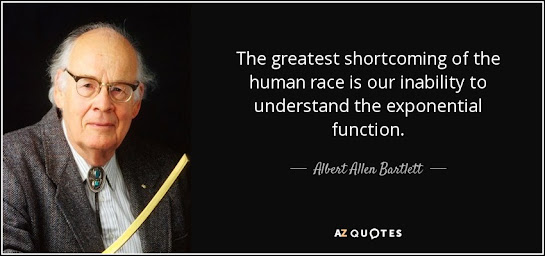
Summing up, one of the unfortunate facts surrounding the predicaments we face is that we discover that we caused them because of who and what we are as a species. We have always wanted to believe that our intelligence made us "smarter" than other species or somehow "better" than other species. While the actual reality doesn't boost our egoes in this manner, nature is indifferent to egoes. At the end of the day, we find out that we are no smarter than yeast, reindeer, or any other species which wound up wiping themselves out because ALL species are subject to the Maximum Power Principle and our intelligence and ability to build things simply made us even MORE subject to the MPP than other species, not less:

As always, here is this week's installation of pictures; this time from Ausable Chasm in New York!





"Your paracetamol (acetaminophen) is 100 percent petrochemical…"
ReplyDeleteYes, but salicylic acid, the precursor for aspirin, comes from willow trees. The ancients used to nibble on willow for pain.
Thanks, Eric .an even deeper view into the abyss ..
ReplyDelete