What Can Be Done About Overshoot?

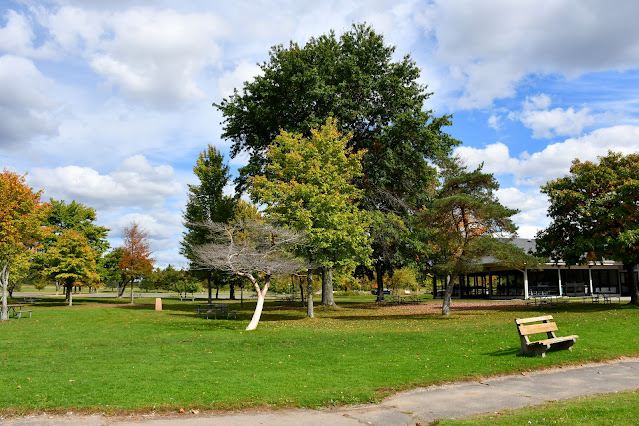
Picnic Area at Lake Powhatan, North Carolina
This article is dedicated to everyone who understands all too well the predicaments we face. I salute all of you, as it is you who send out the message to Live Now, knowing the difference between a problem and a predicament. My message recently got quite a boost when the late Eric Dane said those exact words before he passed away. RIP, Eric.
One of the great benefits of acceptance is the cognizance of our lack of agency for so many of the things that common narratives discuss such as stopping climate change or avoiding collapse or developing a sustainable civilization or any of the other popular ideas that people frustrate themselves with.
One such popular idea that I have tackled recently is that of "saving species" which we (once again) lack agency for. Many people don't understand why we can't save species. It's because our efforts are focused on individuals, not the ecosystems those individuals evolved in. Because of civlization, those ecosystems are either gone or in the process of disappearing (the reason we think those species need saved in the first place). We use technology that is also in the process of disappearing in order to accomplish these goals, not realizing that our efforts are done in vain because we STILL cannot bring back the conditions and ecosystems that these species require for continuation. Take away the energy and resources being used to artifically support these species and they end up being extirpated anyway. Mass extinctions aren't something that can simply be turned off or avoided.
One such popular idea that I have tackled recently is that of "saving species" which we (once again) lack agency for. Many people don't understand why we can't save species. It's because our efforts are focused on individuals, not the ecosystems those individuals evolved in. Because of civlization, those ecosystems are either gone or in the process of disappearing (the reason we think those species need saved in the first place). We use technology that is also in the process of disappearing in order to accomplish these goals, not realizing that our efforts are done in vain because we STILL cannot bring back the conditions and ecosystems that these species require for continuation. Take away the energy and resources being used to artifically support these species and they end up being extirpated anyway. Mass extinctions aren't something that can simply be turned off or avoided.
That is not sentimentality. It is diagnosis.
When ecosystems lose the capacity to regenerate their own complexity, what remains is triage. Each ancient tree becomes a witness. Each snag-top ecosystem becomes a record of how the forest once worked — not as scenery, but as infrastructure.
Old-growth forests don’t vanish all at once. They unravel vertically. Quietly. One missing layer at a time."
I often focus on the impossibilities of reversing predicaments. Many people have complimented me on those efforts, but some have criticized me for not providing "solutions" or things that can be done to improve the situation. In reality, I have provided ways to improve the situation (here and here and here and here). Looking back, I wish I had titled all of those articles, "So, What Can Be Done?" rather than using "what should we™ do?" The word "should" suggests judgment and not everybody is going to agree on what should be done. The word "we" is also a weasel word described in the linked article (click on the "we™"). Then again, would that actually make any real difference to the outcome in the end? Highly doubtful. We're limited by too many factors, especially our short-sightedness and lack of wisdom and just who and what we are as a species operating within our deterministic biological and psychological imperatives.
Anyway, rather than point out how there's really no escape from the predicaments we face, this article is about maintaining the best outlook that can be achieved within one's life. This isn't about solutions or mitigations to the predicaments we face as a species. Instead, this is what one can do about her or his own outlook. I cannot control your outlook nor can you control mine, but we each can improve our own. This is the basis of what can be done. Much regarding the outside world cannot be changed; we can only control our own thoughts and behaviors revolving around the external world. This isn't to say that we cannot influence other people's thoughts and behaviors, just that we don't control them.
If you read that article, then you might have noticed that courage and wisdom are two of the key virtues and that hope doesn't appear here, quote:
"One of the key virtues in Stoicism is courage, which involves facing our fears and taking action in the face of adversity. By cultivating courage, we can overcome obstacles and challenges, as well as develop a greater sense of self-confidence and self-esteem.
Also notice how hope corresponds with fear and courage with a lack of fear. Facing the predicaments we face head on with courage is what is required. Hoping for a better outcome tends to make the situation even worse by looking for false "solutions" and other bargaining ideas that don't actually solve anything. Here's a prime example of one of those bargaining ideas. The claims made in the intro to a post about the article are:
"Without generating additional emissions..." OK, how is the plastic waste collected? How is it transported to the location where it is photocatalyzed? How is the acetic acid transported? Since civilization is unsustainable, this can not be sustainable by definition, since it is a subset of civilization. So, this is just more bargaining to maintain civilization, as usual.
Last but not least in the article on Stoicism, is the part about Living Now, quote:
Once one reaches acceptance of the predicaments we face and understands that no escape is forthcoming or even possible, one comes to a set of harsh realities and understandings. The illusion of control is one very important concept. Comprehending that most everyone alive today under the age of 50 is likely to see at least part of the collapse of industrial civilization over the next quarter century before the last gasp. Of course, several situations could also develop (a nuclear winter?) that would prevent such a witnessing and produce more or less an instant collapse versus an extended one. For anyone who lives in the USA, collapse here has been ongoing since the early 1970s, so those of us who have been alive during this period of time have watched this unfold. We've seen the hollowing out of many industries throughout the Rust Belt and lived through the decline of manufacturing in all parts of the country.
Another piece of the puzzle that acceptance brings is the realization that the technology of agriculture which supports civilization is going away. Understanding that building an off-grid house or cabin and utilizing permaculture and/or regenerative agriculture or food forests won't actually save you from devastation caused by droughts, floods, tornadoes, hurricanes, extreme heat and/or cold, or any other circumstance beyond your control (disease, lack of resources, lack of energy, etc.) means that just because one decides to accomplish all of that does not equate to one being able to survive. In the future that will unfold, many things not considered at the outset of such a journey might just cut the entire journey short (such as many medical/disease conditions as one gets older). This means that one should follow his or her passions and not attempt things simply because it is believed that doing so will promote survival. How does one know that he or she will want to survive in the future? These aren't pleasant thoughts, but the future most likely will not be pleasant and I tend to be painfully honest about these things.
Over the next two weeks, I'll provide even more reasons why survival is not only not guaranteed, but almost assuredly not in the cards. The law of unintended consequences often brings new issues into the mix that nobody had considered. Once again, making plans for the future based on conditions which exist today discounts and/or denies the changes that we already know are coming. By all means, this isn't to suggest that we shouldn't prepare to the best of our abilities; it is to not get wrapped up in goals which are unlikely or impossible. By being attached to a particular outcome, one may be setting herself or himself up for serious mental anguish (this comes from much experience in my own life).
For those who still don't accept that we can't "save" species or "manage" wildlife or "restore" nature, I provide this set of facts regarding our lack of ability to provide any type of sustainable ecosphere, where Tom Murphy explains our hubris in thinking we have any such capabilities:
Presumably, they’d look at you like you’re totally nuts. They might say “That place has no life: no ecology into which I might tuck in. It’s certain death. A barren rock like that has nothing for me to be a part of—no stories to guide and support me.”
On the flip side, it isn’t hard to conceive of a non-hunter-gatherer (modernite; agriculturalist) saying “Yeah, I could work with that.” The mentality here is that (ecologically detached/ignorant) humans exert control over nature: shape it to our needs. Members of modernity exalt the moxie inherent in rising to such challenges. Our culture defines itself by this god-power “over” nature.
The point is that the hunter-gatherer (presumably) puts ecology first, looking for ways to fit into a Community of Life, as an unquestionable part of it. The (dualist) modernite perceives themselves to be transcendent; apart; separate; able to innovate anything they need out of limitless brains—so the mythology goes.
The hunter-gatherer knows instinctively in their bones that separating oneself from ancient ecology is bonkers. Listen to them."
Yes, listen to them! As if telling folks is going to make them do it. I remember doctors telling people to wear masks (they still do), but many people just ignore it anyway. This is precisely why we won't change direction collectively. This is also why Stoicism is so important to maintaining a good outlook. Once one looks at all the facts surrounding all of this, one can't help but realize that the trajectories are not changing or reversing course; despite hype to the contrary.
Something else that always helps me maintain a healthy outlook is spending as much time as possible in nature at places like Glimmerglass State Park.




The attachment to Stoicism misses one very crucial fact: we, no matter which "we" one ascribes to, is a social construct that is absolutely a fact of being human. Detachment is thus a myth! This in no way means that your descriptions of collapse are meaningless nor even not inevitable, just that our being social beings who live within social constructs [of cultures, societies, economies, religions, etc.] cannot be ignored. Even as 'doomers' we live within social constructs that most persons and peoples will not accept - that being your conclusion and intent! Thank you for your blog. Bruce Turton @ 53.5 degrees North Latitiude.
ReplyDeleteIf it is a social construct then it is possible to detach from it, albeit momentarily. This is one of the practices at the core of mindfulness.
Delete"Detachment" as used here is not detachment from society but rather detachment from the idea that we can control society. We can't control external events, only how we react to them. We can accept with equanimity what we cannot control. That is the only path to inner peace. We can choose to live in the now with fear and trembling or with equanimity. It is up to us.
Delete