More "Solutions"

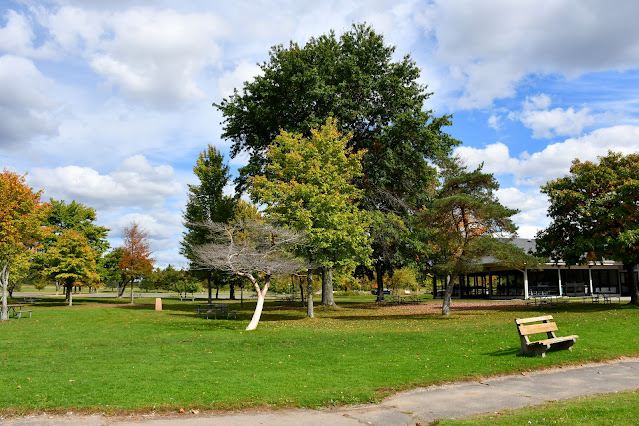
New River State Park Visitor Center, North Carolina
I just came across a new documentary about a documentary I previously saw. It is called, Chasing Time, and highlights the James Balog documentary, Chasing Ice. After watching Chasing Ice (many years ago), I decided to quit procrastinating a trip to Alaska, something I had dreamt about for decades before committing to actually doing it (see Note below). The story of my Alaska Trip begins here and one can click through the pages by going to the bottom of each page and on the left-hand side, select "Newer Post" to advance to the next post. I have a great appreciation for the efforts of the team who put both documentaries together along with the fantastic pictures and coverage in both.
Along the way on my trip were the ruins of many mining sites along with the towns that remained as described in Richard Martin's new article about what finite looks like. Some of these locations have since been destroyed by wildfires, flooding events, and/or dam/embankment/slope collapse. In one unique case which happened just before my trip, a watercourse in the Yukon was rerouted from one river to another, quote:
"The Slims River was previously fed by meltwater from the Kaskawulsh Glacier in the Saint Elias Mountains in the Yukon and its waters flowed into Kluane Lake and on to the Bering Sea. Because of climate change, the glacier has rapidly receded and the meltwater no longer feeds the Slims. The water instead now feeds the Kaskawulsh River which is a tributary to the Alsek River and drains into the Gulf of Alaska.[6][7]"
On the one hand, the issues caused by climate change often lead to people searching for "the solution," unaware that climate change is a predicament with an outcome, not a problem with a solution. Several recent developments have been published, leading to folks like me chuckling about claims of solutions. William Rees came out with a great article explaining a brand new idea to tackle the increasing issue of inequality and poverty, The Roadmap for Eradicating Poverty Beyond Growth. This plan, while far more comprehensive than many, still leaves out ecological overshoot as the root predicament causing those symptoms it aims to wipe out. Rees didn't mince words - he basically shows how such plans can easily be devised but cannot be implemented, quote:
Implementing socially-just no-growth economics is an entirely different matter.
If history and the momentum of MTI culture are any guide, Roadmap has less chance of taking flight than does a butterfly glued to a lead brick."
On a different topic, this time Arctic sea ice, a plan that has actually been around for quite some time is finally getting tested. I rate this one right up there with spraying saltwater into the atmosphere (known as marine cloud brightening) to improve and/or "restore" the reflective nature of the Arctic. Most forms of "solutions" rely on reductionistic thinking and they don't work holistically (meaning that they don't actually solve anything). Here's yet another idea that falls into the same type of tunnel vision that many of the carbon emissions reduction schemes are based upon. Considering the relentless rising of ocean temperatures, I see ideas like this one destined for failure.
Moving on to yet another climate idea, this one involving restoring trees and plants and "regreening dry lands," the authors make the same mistake as the previous two in ignoring overshoot as the root predicament which would have to be reduced first if there were to be any true benefits accruing at scale. They also make the famous WE™ mistake, as in why we won't change direction. I could go into specific analysis for each one of these ideas on why they won't work, but I have already done so for countless other fantasies, myths, and fairy tales such as The Venus Project, the MEER idea, the so-called "energy transition", and self-sufficient communities among some of the more popular solution obsessions. Honestly, I've gotten bored with the whole solution paradigm since I know and accept that what we face isn't a problem with a solution.
For some really far-fetched schemes, check out this Guardian article which highlights several different plans including damming Strait of Gibraltar to lower the Mediterranean Sea, building a new moon, and building new Australian mountains.
Like I've said before, some of the ideas proposed are better than others, and planting trees or other plants isn't necessarily a bad idea. However, many people imitate what they are used to seeing in agricultural fields (monocropping), not realizing that they aren't really improving anything by doing so and quite possibly might be causing more damage than by doing nothing. Planting the wrong species or planting in the wrong soil or attempting to plant in areas that simply can't be properly maintained (see "regreening the desert" or the "great green wall" for common mistakes and the overwhelming failure rate of these ideas) generally causes more issues than leaving well enough alone. Perhaps the worst mistake of all is not seeing that civilization itself is unsustainable, so attempting to "fix" all these various issues is more or less a waste of time unless and until society accepts that these things cannot be fixed.
Perhaps going back a bit in time in this article from John Michael Greer will help those who weren't aware of the peak oil times back in the early 2000's. He gives a perspective that I often find myself saying to those who think collapse is right around the corner or the opposite perspective that technology will "save" us or "prevent collapse" or that peak oil is "a century away." Replace peak oil with climate change, extinction, or any other symptom predicament of overshoot, as I frequently hear the same things over and over about them too. The only constant in all of this that can always be guaranteed is change itself. I find timelines to be rather elusive, although I do think one can find certain timelines to be fairly practical provided one gives a "ballpark figure" rather than a strict day, month, or year.
Like I've said before, some of the ideas proposed are better than others, and planting trees or other plants isn't necessarily a bad idea. However, many people imitate what they are used to seeing in agricultural fields (monocropping), not realizing that they aren't really improving anything by doing so and quite possibly might be causing more damage than by doing nothing. Planting the wrong species or planting in the wrong soil or attempting to plant in areas that simply can't be properly maintained (see "regreening the desert" or the "great green wall" for common mistakes and the overwhelming failure rate of these ideas) generally causes more issues than leaving well enough alone. Perhaps the worst mistake of all is not seeing that civilization itself is unsustainable, so attempting to "fix" all these various issues is more or less a waste of time unless and until society accepts that these things cannot be fixed.
Perhaps going back a bit in time in this article from John Michael Greer will help those who weren't aware of the peak oil times back in the early 2000's. He gives a perspective that I often find myself saying to those who think collapse is right around the corner or the opposite perspective that technology will "save" us or "prevent collapse" or that peak oil is "a century away." Replace peak oil with climate change, extinction, or any other symptom predicament of overshoot, as I frequently hear the same things over and over about them too. The only constant in all of this that can always be guaranteed is change itself. I find timelines to be rather elusive, although I do think one can find certain timelines to be fairly practical provided one gives a "ballpark figure" rather than a strict day, month, or year.
No article regarding solutions would be complete without going into various mechanisms that people frequently think might actually succeed, especially politics, laws, or even the politicians themselves. To help those who may be challenged by thinking that voting the "right" people into office cannot solve these predicaments, try to keep in mind what we are all a part of - an unsustainable system based on technology use - civilization. Voting won't change that simple fact, no matter how hard one votes. Tom Murphy had an excellent article regarding laws, proving that regardless of what laws are enacted, nature and the laws of physics don't bend to anthropocentric laws or perspectives. Likewise, overshoot is a phenomenon that doesn't care whether one is a Democrat, Republican, or Independent. Collapse is inevitable regardless of your position or beliefs. As much as that sentence was painful to write, there have been people who have argued with me about this.
Another topic subject to the same rules of nature and thermodynamics is money. So many different topics here in the field of "solutions" that people often forget are not separate from nature (or thermodynamics), but a part of both. Everything is connected. Only in our minds can individuals get the illusion of self and separation. Going into fine detail about money and the financial system and how it all operates, Steve Bull describes how the whole system exacerbates overshoot rather than provide any sort of "solution" and points out the roles efficiency, Jevons paradox, and the Maximum Power Principle [Odum's principle in Steve's quote] play:
"Technological efficiency, often touted as the solution to resource depletion, historically follows Jevons Paradox: gains in efficiency reduce the cost of energy services, which incentivises greater total consumption, not less. More efficient engines led to more cars; more efficient lighting led to more illuminated spaces; more efficient computing led to exponentially more data centers. Our monetary system, by lowering the cost of credit, accelerates this cycle, funding ever-larger technological infrastructures that lock us into higher gross throughput while eroding net surplus. Each new technology promises to “solve” the energy problem, but in practice it becomes another way to maximise power drawdown — another tool in the service of Odum’s principle, not a departure from it."
Once again, having the capability to visualize the system of civilization and see it for what it is remains a difficult but key ability in comprehending why literally none of the so-called "solutions" have any ability to solve the ongoing collapse and worsening of symptom predicaments. The only way to make anything better would be to voluntarily reduce overshoot and work towards abandoning civilization at first by tackling dangerous complexities that have been built (such as nuclear power plants and hazardous biolabs [BSL-4]) - something very few would even be interested in attempting. Elisabeth Robson shared this recent article about the delicate balancing act that keeps civilization functioning. So, overshoot will most likely be reduced the same way it always works - collapse and die-off.
The only way to really make things better is to walk away and opt out to the extent possible. Focus on local community, as today's interconnected world won't stay that way. Even people here in America are beginning to understand the consequences of collapse. Perhaps I should more accurately state that people are now beginning to accept the reality that conditions aren't going to improve much (if at all); instead, they will continue worsening and this decline will continue to grow.
This is why I promote Living Now as a means to enjoy what we have today. Spending time in nature in remote areas can be so joyful and provide a needed recharge. Two more entries here, Jack's Creek Covered Bridge and Roanoke Mountain Picnic Area, gave me a boost in 2025.
Note: One of the main reasons for my procrastination is because I knew that there was no real way to get to Alaska and back in the standard 2-week vacation time and actually be able to see much. Being a wedding professional, taking 5 weeks off in the summer means giving up a substantial amount of income, so Balog's documentary gave me the helpful nudge I needed to get the plans underway. I had never camped on any trip before, and had motels in Alaska not been priced so high, I may never have gone that route. The trip remains one of the most educational ones I have ever taken to this day. It also remains the longest, both in mileage and time.





Comments
Post a Comment