What Is Hermeneutics?

If you look closely at the area just slightly to the left of center in the picture above, the same area is enlarged below:

Rough Ridge Trail, North Carolina
Today I want to talk about a rather special topic. This article isn't initially about collapse or overshoot or even climate change, but we will get there later. How many times have you had a conversation with someone and (if they were actively listening) you discovered that they really didn't understand what you were telling them? How often have you read a conversation online and realized that two people were "talking past" each other with neither one fully comprehending the other party? There is a study of interpretation called hermeneutics, quote:
So, once again, the way we think the world works doesn't always work the way we think it does. I have tried to cover this particular topic in many ways: through denial of reality, through lack of a universal perspective, through our lack of free will, through lack of acceptance, through false beliefs, and on and on. Hermeneutics is just one more layer of complexity to add to the already extensive list of layers that make up the reasons that reductionism doesn't work holistically.
Recently a friend posted this statement: "One of my former toxic traits was thinking that if I explain something clearly enough, people would suddenly develop critical thinking skills." That was one of those sarcastic statements that I often make - I never actually thought anyone would suddenly develop critical thinking skills if he or she didn't already have them, but I figured that if I explained something well enough, then a person would be able to comprehend what I was actually trying to communicate. I learned that even critical thinkers may not necessarily actually grasp what I am trying to tell them if they do not comprehend as little as one area of expertise involved in the overall set of areas required to understand a particular predicament or issue, similar in a sense to Liebig's Law of the Minimum.
For instance, there are a few climate change scientists I have mentioned a few times over the years for the blind spots they possess. If one understands the power of denial of reality, or the power of money (book sales, funding for research, or other sources of income), one can easily see potential reasons for their blind spots (maybe they are well aware and simply cover said awareness up to maintain a certain narrative lest they lose funding, sales, or other income). Some of them simply suffer from false beliefs (Jason Box and his strange push of cryptocurrencies probably falls into this category). Last month I pointed out how ignorance, hubris, and stupidity also is responsible for a large number of misunderstandings by climate scientists, especially when it is outside of their specialty.
A recent article caught my eye because of the inflammatory tone and complete misconception the author came out with. Once again, someone marches out with accusations and claims that fall flat when the reality is actually very different from both. I've pointed this particular author out in the past and surprisingly, she points out exactly the issue, quote:
Her first mistake was to claim that there are "solutions to the climate crisis." There are no solutions because climate change is not a problem with an answer or solution. Her second mistake is acting as if the climate crisis can be solved without tackling ecological overshoot, the much larger and more important predicament which actually is causing climate change in the first place. There are literally millions of ideas out there which can address overshoot and reduce harm. None of them will "solve" climate change or even overshoot because doing so would be a multi-generational effort and require people to give up certain comforts that most would loathe or even refuse to do. Look how many people refused to mask up during the COVID pandemic (which actually is still with us today). The exact same issues would be experienced if climate change mitigation efforts were made mandatory.
She goes on to say:
"It's a strange accusation to level at a climate scientist who’s spent the last twenty years warning about the very real risks climate change poses to every aspect of our lives. But it starts to make sense when you look at where it’s coming from: almost always someone in a high-income country who’s not struggling to feed or shelter their family, as so many already are thanks to climate-fueled extremes, but is so (rightly) alarmed by everything they've read and heard about climate change that they've (wrongly) concluded the best, or perhaps easiest, response is to give up. And while I can understand the temptation to do so, if we all followed that path, our doom would be all but guaranteed."
That's actually funny, because I've been warning about climate change for 40 years and so have multitudes of other folks whose articles I feature regularly. Furthermore, none of these people (including myself) has ever said to "give up." I have never heard anybody in the overshoot community say that people should give up, either. What she isn't hearing is the context behind her claim - that overshoot is a predicament with an outcome, not a solvable problem. Claiming otherwise is nothing more than a false narrative. Last but not least, because of overshoot, our doom IS all but guaranteed. Collapse is the guaranteed outcome, and as Dr. William Rees has warned us many times (this one in The Population Conundrum), overshoot is a terminal condition, quote:
There's no doubt in my mind that climate change is a very serious symptom predicament of overshoot, and one that is going to cause serious harm to billions of people, if it hasn't already. However, those of us who actually comprehend what is going on and realize that climate change can not and will not be reduced absent efforts to reduce ecological overshoot doesn't equate to giving up. I often post a link to my article about The Cycle of Life in refutation of such claims, because it explains what we are really saying and points out that we are instead tackling the more important predicament of overshoot rather than attempting to treat symptoms such as climate change.
If one takes the initial 5 paragraphs into consideration, one can easily see how the likelihood of working together to reduce climate change has turned out so far (what exactly have we accomplished?). Even if one focuses solely on carbon emissions (reductionism at its finest), we haven't even managed to cap them at a plateau, let alone reduce them. One of the best articles I've recently read points out most if not all the issues about "solutions" and how they generally leave out any or all of the negative qualities required for their adoption. Some of the best quotes from Steve's article are below:
"Virtually every technology presented as a “replacement” for destructive systems (particularly hydrocarbon- based ones) is actually additive to total human throughput. Hydrocarbon use continues to rise alongside the growth of alternatives. The “transition” story is fictional — a comforting myth. Solar, wind, nuclear, hydrogen, biofuels, bamboo, hemp — all have been added ON TOP OF existing energy systems, not displacing them."
"Virtually every technology presented as a “replacement” for destructive systems (particularly hydrocarbon- based ones) is actually additive to total human throughput. Hydrocarbon use continues to rise alongside the growth of alternatives. The “transition” story is fictional — a comforting myth. Solar, wind, nuclear, hydrogen, biofuels, bamboo, hemp — all have been added ON TOP OF existing energy systems, not displacing them."
(Emphasis added.)
Salvation stories grant the sense that humans can “fix” their way out — that action matters, that control is possible, that collapse can be averted through ingenuity. This illusion is preferable to accepting powerlessness before biogeophysical limits."
"Most people will still not understand what is happening. They will blame politicians, immigrants, conspiracies, anything except the one thing that is actually to blame: not a decision, but a thermodynamic imperative–the Maximum Power Principle that has driven every living system to capture and dissipate ever more energy. We did not choose more, more, more. It chose us."
The important point: "We did not choose more, more, more. It chose us." Steve has worked diligently to point out a large percentage of the ideas labeled as "solutions" over the past couple of years at least and has shown all of them to not only not be solutions, per se, but most are ideas that can only exacerbate overshoot as a result of attempting to adopt them or adopt them at scale.
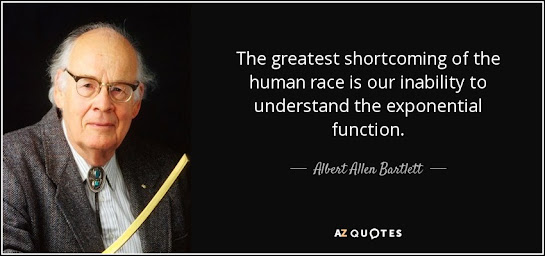
Eliot Jacobson tells the story of what is headed our way here. I'm not a climate scientist, just someone who has been studying climate change for a long time. None of what Eliot wrote surprises me at all, but I know many people who are not only surprised but seriously taken aback by the upcoming changes. This almost always happens with exponential change of any type, as told by the late Al Bartlett in his epic Arithmetic, Population, and Energy presentation.
What I found especially important in Eliot's article was the part about Normalcy bias. I came out with an article back in 2021 about optimism bias which highlighted people's irrational ideas regarding "stopping" or "reversing" climate change (or really any other predicament), not realizing or taking into consideration the true scale of such an undertaking and whether or not such an idea is even possible.
I recently came across this great video with Derrick Jensen, which goes into great detail about why civilization and advanced technology use are both unsustainable. Despite my efforts at providing this information to others, it appears rather obvious Derrick hasn't had any more luck with society in general than I have. Those of us who are interested are the ones who care; it is difficult if not impossible to get one to understand without one being interested in the subject material. One of the things that was divulged here is the destruction of community by technology and technology addiction. The original part of it was when Eric's grandmother hated radio because it destroyed community, but now one can also see how AI is working on destroying community even more completely and everyone within the system of civilization will be affected. Think of The Borg - the hive mind - resistance is futile. This podcast also brought "The Machine Stops" by E.M. Forster back to my mind.
Considering hermeneutics and all the other complexities of civilization and societal culture which I pointed out above, I don't see how anyone can reduce the existing predicaments we face down into problems. In fact, that is precisely what became so fascinating to me - that the situation wasn't as easy as a problem that could be solved. So, I wanted to find out why it wasn't and what could be done about it. My discoveries made me aware that there were, in fact, things that could be done about it, but those things were not only highly unlikely to be undertaken at scale, they still wouldn't "solve" the predicament even if they were. The absolute best that could be achieved would be a reduction in severity of the outcome. A bittersweet discovery, to say the least, but acceptance of these realities nets one a different outlook - one which doesn't expect much.
From my perspective, it is ethically wrong to tell people that there are solutions, because there aren't. There are ideas to mitigate the circumstances we find ourselves enmeshed within, but the likelihood that society will ever adopt such ideas at a scale large enough to make much of a difference within the timeframes necessary to prevent disaster is already in the rear-view mirror. I just did a check of Worldometer's world population and we're at 8.3 billion. If society really was going to make a dent in the predicament we face, we would be fighting against AI and the illusion of extending civilization long into the future and seriously working to bring population numbers down. This is why we won't change direction. So, our population numbers will be brought down, but not voluntarily by us.
I know it's not pretty, and I'm sorry. I really would love to tell a different story, but I'm not going to lie and try to portray some set of fantasies, myths, and fairy tales. The best story I can muster is to appreciate and enjoy what we still have today. Be in awe of what life is. Live Now.
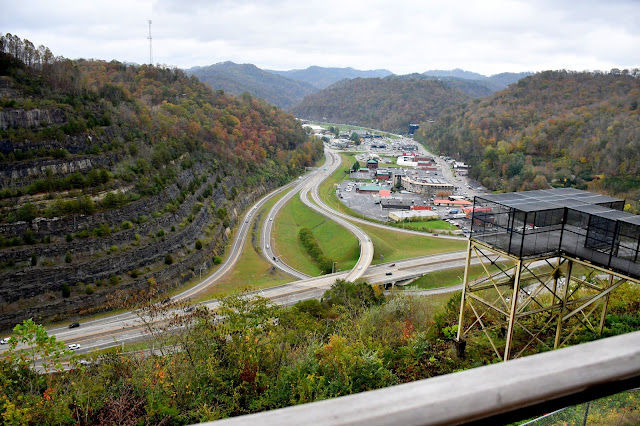
Speaking of being in awe of life, I have posted a few pictures in the last several articles from the Rough Ridge Trail, so here's the full set of pictures from it. Also published today is the set of pictures from my first trip to Mount Jefferson State Park! Enjoy!





I was excited when I saw your next piece will be about hermeneutics, since it often fascinates (and/or frustrates me during arguments) when people completely talk past each other, or appropriate different meanings to the same things.
ReplyDeleteEven in this article you gave us great examples, which may have been unintentional, but nonetheless they are excellent!
For example, what do people expect from a climate 'solution'? Is it a return to the pre-industrial, stable, cool climate? Or is it just slowing down the heating to a more manageable level?
If it is the first, then obviously that is impossible, don't even try. The second, theoretically possible, but collective action is a no go. Same outcome of course, but I'm sure this difference in interpretation has led to misunderstandings before.
Or, there's overshoot being a terminal condition. Is it terminal as it is an unsustainable state, which is always followed by a population collapse, or is it terminal for the species? Broadly, across all animals, overshoot happens all the time. Populations boom and bust, which is seen easily in monitored species. Some recover, some completely vanish. I know you wrote extensively on the topic of human extinction, I am not trying to argue with you, just pointing out some examples of how hermeneutics shows up absolutely everywhere, even where we don't expect it.