What Is The Need For Closure?

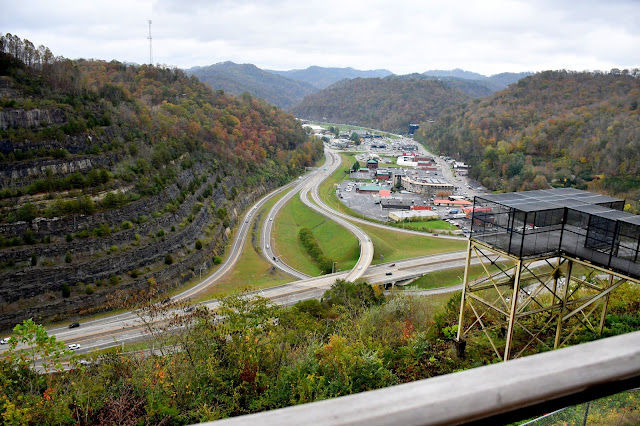
Picture taken from Mount Jefferson, North Carolina
This article is going to be a bit esoteric. The general topic of psychology seems a bit broad but does appear to fit. The main topic of how our thinking and behavior have contributed and continue affecting our trajectory as a species has always been rather fascinating to me.
One of the many phenomena surrounding ecological overshoot and its symptom predicaments that exacerbate the situation is the constant "solution" obession. Many times I have sought answers for why people continue to look for fantasies that simply cannot be. I have tried reasoning with those who support various schemes to command and control the outcome as if such an idea is even possible, let alone feasible. Degrowth, regenerative agriculture, permaculture, "sustainable" civilizations such as The Venus Project and similar utopian plans, AI-generated plans, geoengineering such as the MEER plan, and every other cockamamie idea that pops up routinely. Some of these ideas might be fine for small, local communities in an effort to deal with the ongoing and deepening collapse, but they either cannot be scaled up due to a lack of energy and resources to do so or a lack of ability to enforce compliance. Both of those conditions can only increase as time moves forward, as this is part of collapse.
Steve Bull recently came out with an excellent article explaining precisely why yet another similar idea cannot be adopted for these very reasons (and he goes into great detail on the plans and the issues which will prevent those plans from getting off the drawing board). Two quotes from the article that I found particularly important:
"There is a deeper layer to this impossibility, one that neither de Rugy nor the GJP’s team fully confronts, and which has been a recurring theme in my own reflections on degrowth. Even if a managed contraction of the global economy were biophysically desirable and technically coherent, there is little reason to believe that the governing institutions of complex societies would ever genuinely pursue it. Those with a significant vested interest in status quo arrangements being maintained have the resources, influence, and power to ensure such a path is never pursued.
The degrowth movement, for all its moral clarity, has long carried a freight of denial and bargaining — as if the right policies, the right leaders, or the right supranational framework could yet steer the world toward a soft landing. Such an approach may have had some purchase many, many decades ago, before the momentum of global human overshoot had locked in so many irreversible changes. Today, having travelled so much further down the path of planetary damage, and with the ever-enlarging avalanche of consequences already in motion, the window for a globally orchestrated degrowth has almost certainly closed."
Steve devises a better idea, but then points out the reasons it can’t or won’t be undertaken:
Yet this decommissioning itself presents a painful paradox: safely dismantling nuclear plants, securing pathogen collections, and neutralising toxic chemical stockpiles demands precisely the kind of coordinated, technically sophisticated governance that the preceding analysis suggests is improbable and prone to capture. It is one of the deepest tragedies of the predicament that even the honest turn toward local resilience inherits global-scale liabilities that no single community can shoulder alone, and for which there may be no orderly resolution. In a world of overshoot, the material footprints of the rich — and of the expanding global middle class — must shrink if the poor are to have any hope of securing a dignified life."
So, what exactly is the psychological need for closure and why is it so pernicious with regard to overshoot? Primarily, it is explained here, quote:
Needing closure isn’t a flaw or a sign of weakness. It’s a fundamental cognitive mechanism that helps you make decisions and move forward in life. Without any drive toward closure, you’d be paralyzed by every choice, endlessly weighing options without ever committing.
The need for closure exists on a spectrum. Everyone seeks closure to some degree. The difference lies in intensity. Some people can sit comfortably with unanswered questions for weeks or months. Others feel an urgent pull to resolve uncertainty within hours."
This partially explains the constant obsession for solutions, as acceptance of overshoot as a predicament requires a suspension of the need for closure to a certain extent. If one can fool himself or herself into thinking that overshoot can be solved, the cognitive dissonance caused by the aversion to ambiguity (the uncomfortable and/or intolerable condition which is inevitably part of the reality of overshoot) can be reduced or eliminated in one's mind. It's a neat trick, huh? The only trouble is that this only works in one's mind and not in the real world. This is where all those so-called "solutions" go to die - in compartmentalization.
Those of us like me who comprehend that most everything that surrounds us today within civilization is just a temporary "blip" - a one-time explosion of technology and infrastructure powered by the discovery of fossil fuels - and that civilization is just temporary don't feel any need for a solution because what most people want to "protect or save" (civilization and their current way of life) cannot be protected or saved. It was always going to be temporary, just like every other civilization that has ever existed.
I'll admit, when I first discovered overshoot, I sought an answer or resolution of some sort too. This is just normal human behavior. None of us really wants to lose our way of life - but some of us understand that this isn't really up to us. The inevitable outcome depends upon various systems and variables that continue evolving and changing.
Some people have chosen a different way of achieving closure - through the idea of near-term extinction. What exactly is near-term? From my perspective, it is long after my own lifetime, perhaps a century from now. I don't think anyone knows for sure precisely when it will happen, and those who claim they do are simply making an educated guess. I have a much better idea as to when industrial civilization will collapse than I do about NTHE. However, there are several different scenarios which might bring our demise much sooner than expected (such as a nuclear winter or a supervolcano eruption).
In previous articles, I have shown how many people aspire to specific mitigations or even a collection of them (frequently labeled as "solutions"). I have no doubt that these folks mean well and that their heart is in the right place. I also note that many of those folks are neurotypical, in the sense that, in their minds, everyone wants to join in to make their goal work. Unfortunately, the world doesn't work that way. Neurodiverse people will only join in if what is being proposed checks all the boxes that they see fit to do, and then only if what is being proposed doesn't also infringe somehow on boxes that are on their "no" list. But there will also be many other people who likewise will not join in for various reasons. This is why so far there have been no serious attempts to reduce overshoot at scale. Even attempts to reduce just one symptom predicament, climate change, have failed. Of course, in order to reduce climate change, overshoot would be required to be reduced as well (precisely why climate change hasn't been reduced).
I tend to be a high NFC person. However, certain subjects may call for more of the exploration type and with regard to this blog, I spent quite a bit of time debating about it before committing to actually writing more than just the 3 or 4 articles I had written previously. This topic is something I am constantly still learning about almost every day, despite having a good understanding of it before I decided to start writing. I have changed my views several times (albeit minor clarifications) upon coming across new information and I expect that this will be the case as time moves forward for as long as I continue writing.
A loosely related topic regarding the topics of neurodivergence and psychology in general was revealed in a recent post highlighting the subject of being an otrovert in a new book by Dr. Rami Kaminski:
As can be seen in the above information, the need for closure can, in many cases, be counterproductive. Within the topic of overshoot, especially when dealing with symptom predicaments, the need for closure often produces results which actually exacerbate the existing issues rather than make anything better. As Richard Martin recently pointed out in this article:
"I am reminded of the most fundamental laws of nature — energy can neither be created nor destroyed, it can only be transformed. And the useful work we extract from that transformation is always less than what we put in. These laws do not yield to our desires or our technology. They simply are.”
This need for closure leads many people to look for ideas that they see as "solutions" which don't actually solve the root predicament. This is because our behavior of technology use has almost completely obscured our relationship with nature from our view, as Adrian Lambert points out here:
That is the expected outcome of an intensive system.
A feedlot animal does not need to understand the grain system. The urban human does not need to understand the supply chain. The system understands on their behalf.
Until the systems break down."
That same reality affects our relationship with nature in many other ways as well, obfuscating our ability to truly comprehend what is (or was) actually going on in our world. One of the things I appreciate about Lyle Lewis's articles is how they open my eyes to see the world in a different light. His latest article tells how many people make anthropocentric assumptions such as what engineering by nature looks like. Like Adrian's article above, it demonstrates how a large portion of society simply has no ecological knowledge upon which to base a realistic approach to overshoot and/or any of its symptom predicaments.
In a movie with Iain McGilchrist titled, The Divided Brain, more of this inability to clearly see nature and the planet which surrounds us is brought into the light, sharing many of the same concepts as Adrian's and Lyle's articles above. I brought this topic up before when McGilchrist appeared on an episode of The Great Simplification with Nate Hagens. Incidentally, here is the TED talk that Jill Bolte Taylor gave (she is the artist and brain scientist who had a stroke who appears in the middle of The Divided Brain).
If a cultural shift of utilizing more right brain thinking could be facilitated, could society be driven towards a behavior away from more technology use into a future with less technology use voluntarily? It sure is a nice thought and one I advocated for here and here and here. As McGilchrist discussed, however, in other civilizations, society became more left brain-oriented as their civilization collapsed. I notice the same phenomenon happening now, so it does seem like quite the long shot.
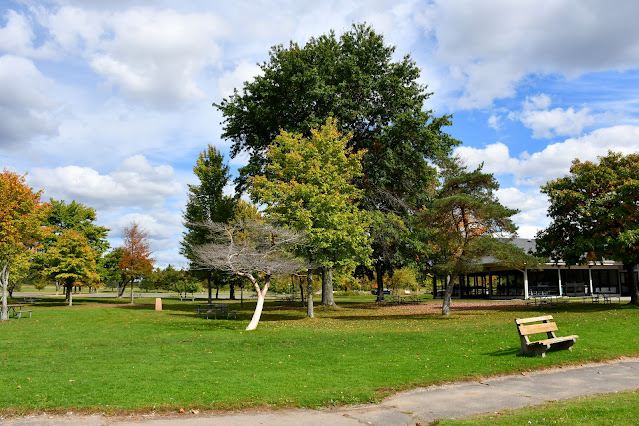
I do not see closure as a possibility for overshoot. The effects we (our species) have put in motion will continue to play out long after the next millenia. Still, what we can witness today is the beauty in nature playing out daily all over the world, as shown at New River State Park and Fred Clifton Park at Lovers Leap Overlook (Spring 2025). May those pictures inspire you to get out and enjoy what's still available now!





Comments
Post a Comment